
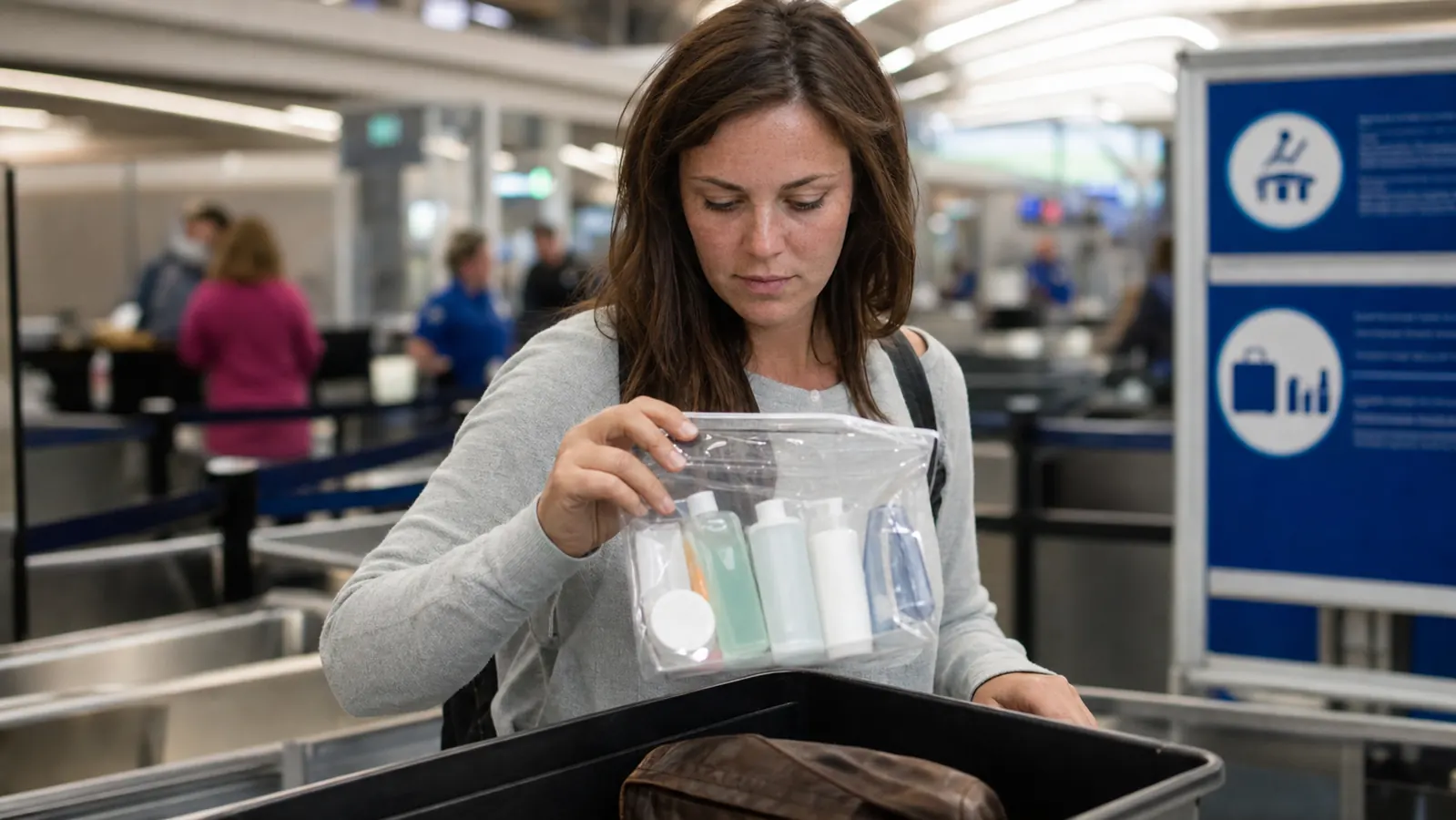
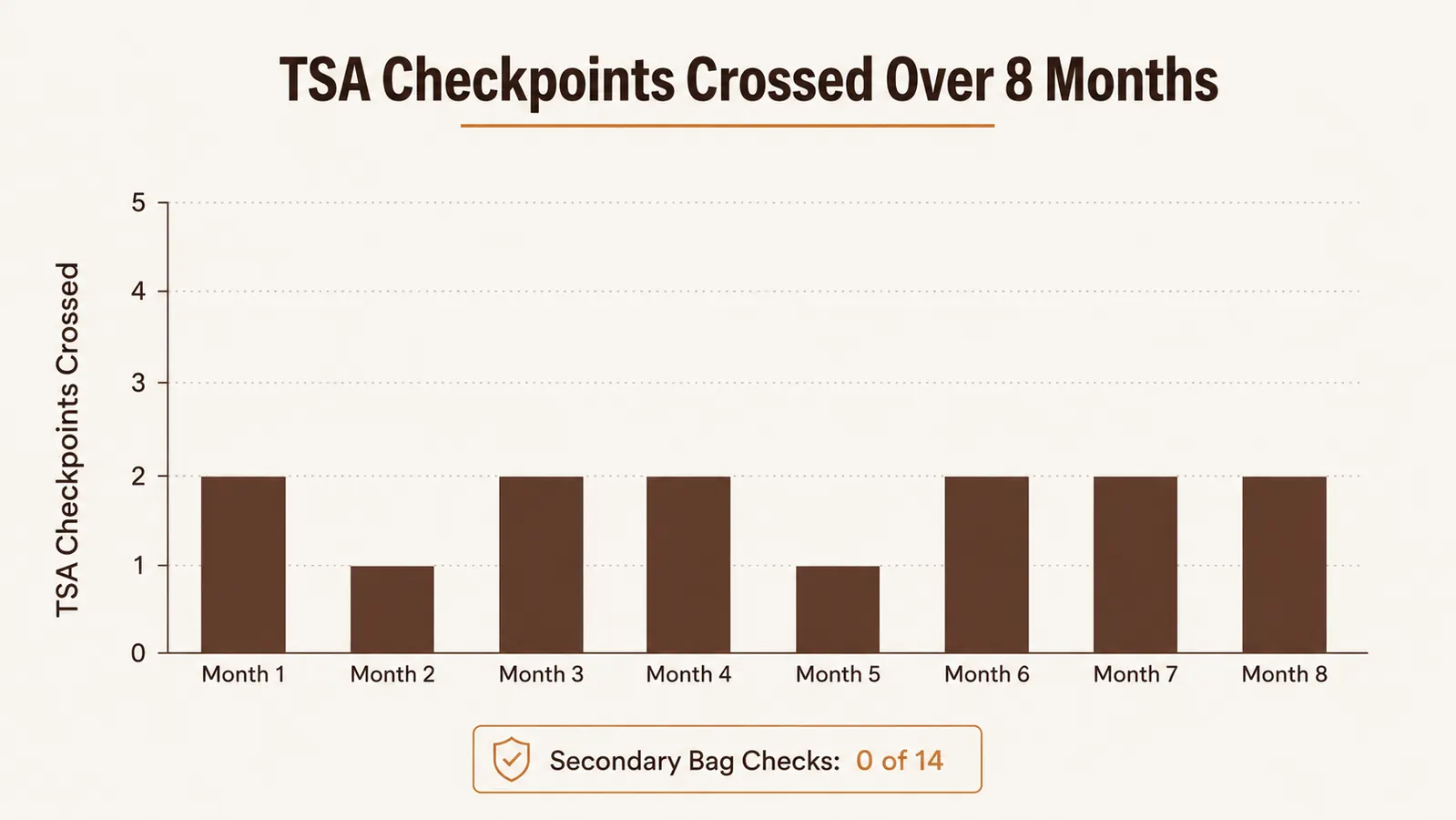
I started carrying this PACKISM 3-pack of clear toiletry bags in December, ahead of a run of travel that ended up meaning a trip almost every month for the eight months that followed. Two work conferences, a family trip over the holidays, a ten-day trip to Portugal with one checked bag, and enough short weekend trips in between that I stopped counting somewhere around month five. By my own tally, that 3-pack went through fourteen separate TSA checkpoints across eight months, domestic and two international departures, and I rotated the same three bags the entire time rather than buying replacements.
This review covers what happened after fourteen checkpoints, not the first one. Clear toiletry bags all look the same in a product photo, a rectangle of PVC with a zipper, but the real test is whether the zipper still runs smooth in month seven, whether the seams hold when a bottle leaks, and whether the bag actually saves you time at security instead of costing you a pull-aside for a second look. That is what I tracked, trip by trip.
The Quick Verdict
A 3-pack that earned its keep over eight months and fourteen TSA checkpoints. Zero secondary bag checks, one bottle leak the seams handled fine, and only one of the three zippers showing any wear by the end.
Amazon Check Today's Price →Tired of the TSA officer squinting at your gallon ziplock bag?
This is the exact 3-pack of PACKISM clear toiletry bags from this review. Check today's price and current availability on Amazon before your next trip.
Amazon Check Today's Price on Amazon →How I've Used It
The setup I landed on after the first couple of trips: one bag stays permanently packed with my everyday liquids, toothpaste, contact solution, a travel razor, and gets refilled with fresh 3.4-ounce bottles before every trip. The second bag holds sunscreen, bug spray, and anything seasonal that only comes along on certain trips. The third stayed as a backup for longer trips where I needed a second round of liquids for a checked bag, since TSA's carry-on liquid rule does not apply once a bag is checked.
The Portugal trip was the real test of the rotation. Ten days, one checked bag, no laundry service, which meant the carry-on bag had to survive both the outbound security line at home and the return security line in Lisbon with a completely different set of officers and a completely different checkpoint layout. It did. Pull the bag out, set it on the tray, no questions, no second look, both directions.
I settled into a Sunday-night routine of refilling the bottles before every trip rather than topping them off haphazardly on travel day, and the bag made that habit easier to keep because I could see at a glance which bottles were running low without unzipping anything. That sounds small, but across eight months of monthly trips, not scrambling for a travel-size shampoo at eleven at night before an early flight was worth more than I expected going in.
I tracked four things across the fourteen checkpoints: whether the bag got pulled for a secondary check, whether the zipper ran smoothly closing and reopening it at the checkpoint under a bit of time pressure, whether the seams held when something leaked inside the bag, and whether the plastic stayed clear enough that an officer could actually see the contents without me unzipping it, which is the entire point of using a clear bag in the first place.
What's Actually in the 3-Pack
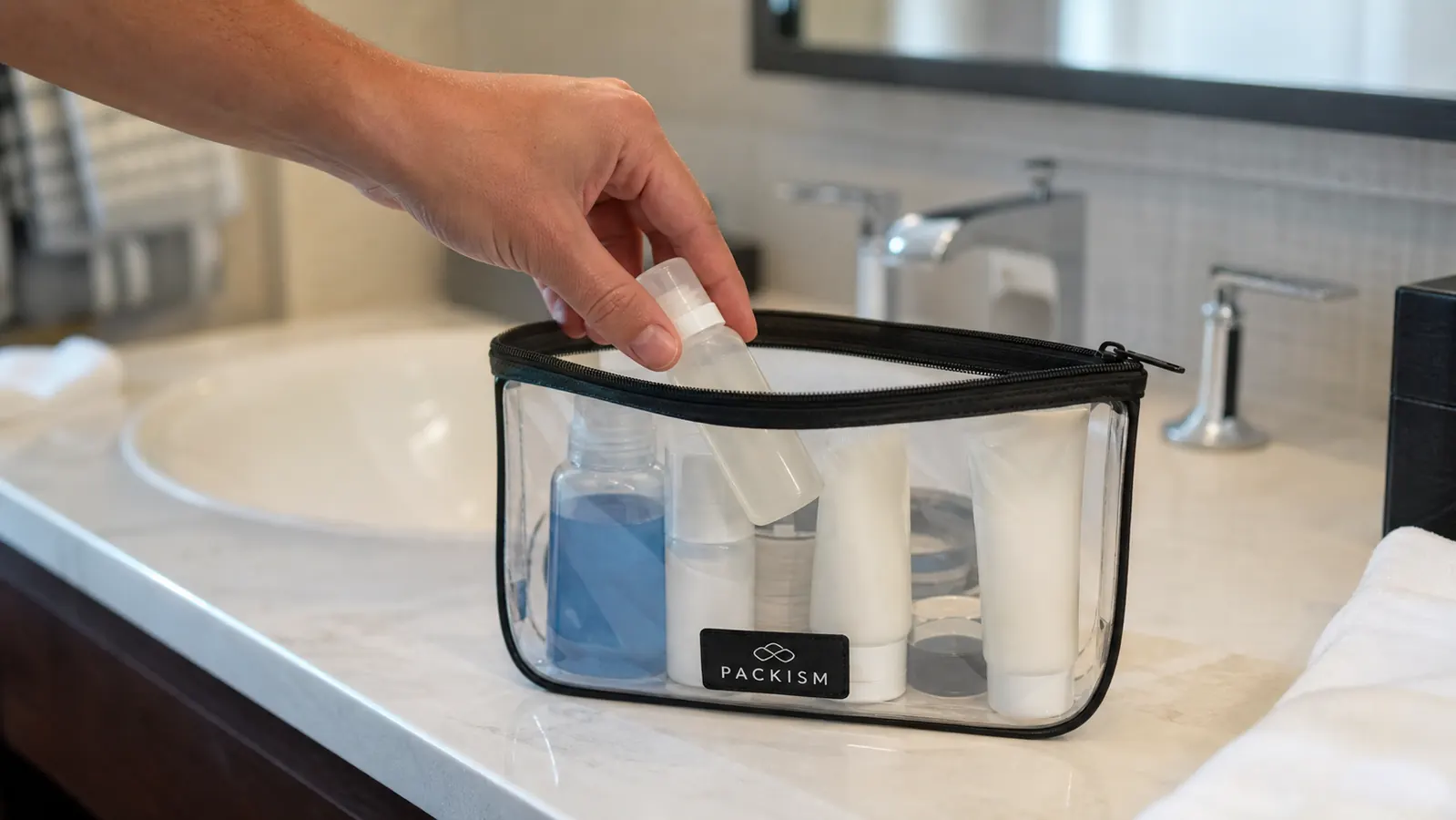
The PACKISM set ships as three identical bags, each sized to the standard TSA quart-size dimension, made from a heavier PVC than I expected for the price. The zipper runs the full top edge and closes with a simple pull tab rather than a double track, which keeps the bag flat when empty and easy to pack against the side of a carry-on. There is no interior divider or pocket, just one open compartment, which is exactly what a checkpoint bag should be since dividers only slow down the moment you have to lay everything out for inspection.
In practical terms, one bag holds about six to eight travel-size bottles comfortably before the zipper starts to fight you, which lines up with what most travelers actually carry: toothpaste, a small shampoo, contact solution, a roll-on deodorant, sunscreen, and maybe one extra. If you want the full case for why a clear bag like this beats a random plastic pouch from a drugstore, I laid out ten reasons in this piece on why a clear toiletry bag is worth buying, and the short version is visibility and reuse. A free ziplock bag is not built to survive fourteen checkpoints. This one was.
What surprised me was how much the PVC stiffness mattered in daily use. A soft, floppy clear bag collapses when you try to stand it up on a bathroom counter, and you end up chasing bottles across the counter every morning. This one holds its shape mostly upright even half full, which is a small thing until you are getting ready in an unfamiliar hotel bathroom at six in the morning with no shelf space.
I also measured the seams against a plastic ruler out of curiosity after month four, mostly to check whether repeated packing had stretched the bag past the quart-size threshold the way cheap PVC sometimes does. It had not. All three bags still measured within a fraction of an inch of the original dimension, which matters more than it sounds like it should, since a bag that stretches out of spec over time is a bag you eventually have to explain to a TSA officer.
8 Months of TSA Checkpoints: What I Tracked
Zero. That is the number of times any of the three bags got pulled for a secondary check across all fourteen checkpoints, domestic and international. That is the number that matters most for a bag whose entire job is to make the liquids portion of security screening faster, not slower. Every single time, the officer glanced at the bag on the tray, saw bottles clearly through the plastic, and waved it through without asking me to open it or remove anything.
The one real stress test came in month six, when a small bottle of sunscreen cracked at the cap inside the bag during a flight, likely from cabin pressure, and leaked across the bottom of the bag. The seams held completely. Nothing leaked out onto the rest of my dopp kit or into the surrounding pocket of the carry-on. I rinsed the bag out in a hotel sink that night and it was back in rotation the next morning, no lingering smell, no cloudiness where the sunscreen had pooled.
The two international checkpoints, one in Lisbon and one on the way back through a connecting hub, ran differently from any domestic checkpoint I hit. Both required liquids bags to be removed from the carry-on entirely and placed in a separate tray rather than staying zipped inside the bag, which is standard outside the US. Having a bag that was already organized and quick to grab, rather than loose bottles rattling around a side pocket, made that extra step faster instead of slower, and I did not have to repack anything before moving on.
Clarity is the other thing I watched closely, because a clear bag that fogs up or yellows over time defeats its own purpose. Two of the three bags still look close to new at month eight. The third, the one that held sunscreen most often, has a faint haze in one corner where sunscreen residue sat longest before I rinsed it, but it is still clear enough that contents are obviously visible at a glance, which is the actual standard that matters at a checkpoint.
The TSA 3-1-1 Rule, Explained Correctly
Since this bag exists entirely because of one TSA rule, it is worth stating that rule correctly instead of the loose version most articles repeat. The 3-1-1 rule allows containers up to 3.4 ounces or 100 milliliters each, and all of those containers have to fit inside one single quart-sized, clear, resealable bag per passenger. Not per bag, per passenger. One quart bag, one person, containers no larger than 3.4 ounces each, however many fit inside that one bag without forcing the zipper.
That is why the sizing on a bag like this actually matters and is not just a marketing detail. A bag that runs bigger than quart-sized is technically out of spec even if it is clear and zippered, and I have watched a fellow traveler get asked to consolidate into a smaller bag at the checkpoint because theirs ran oversized. Each PACKISM bag in this set measures to the standard quart dimension, which is part of why none of my fourteen checkpoints ended in a conversation about bag size.
Where the Zipper and Seams Started to Show Wear
I want to be direct about the one weak point, because a review that finds nothing wrong after eight months of real use is not being honest. The everyday bag, the one that got zipped and unzipped at every single checkpoint and probably a dozen more times a week just for regular toiletry access, developed a slight stick in the zipper pull starting around month five. It still closes every time, but it takes a small extra tug at one spot near the corner where the track has flattened slightly from repeated use.
The other two bags, which saw less frequent zipping since they were not part of daily routine, show no meaningful zipper wear at all by month eight. That tells me the wear is a function of cycles, not a defect in the material, which lines up with what you would expect from any zippered bag used this often. If you use one bag as your daily driver the way I did, expect the zipper to show some wear by month five or six. If you rotate more evenly across all three, expect it to last longer.
Seams held up better than the zipper did. No split corners, no separated edges, on any of the three bags after fourteen checkpoints and a couple hundred open-close cycles between them. Given that the sunscreen leak in month six put real pressure on the bottom seam of one bag, and it did not budge, I am comfortable calling seam durability the strongest part of this set.
Alternatives I Considered
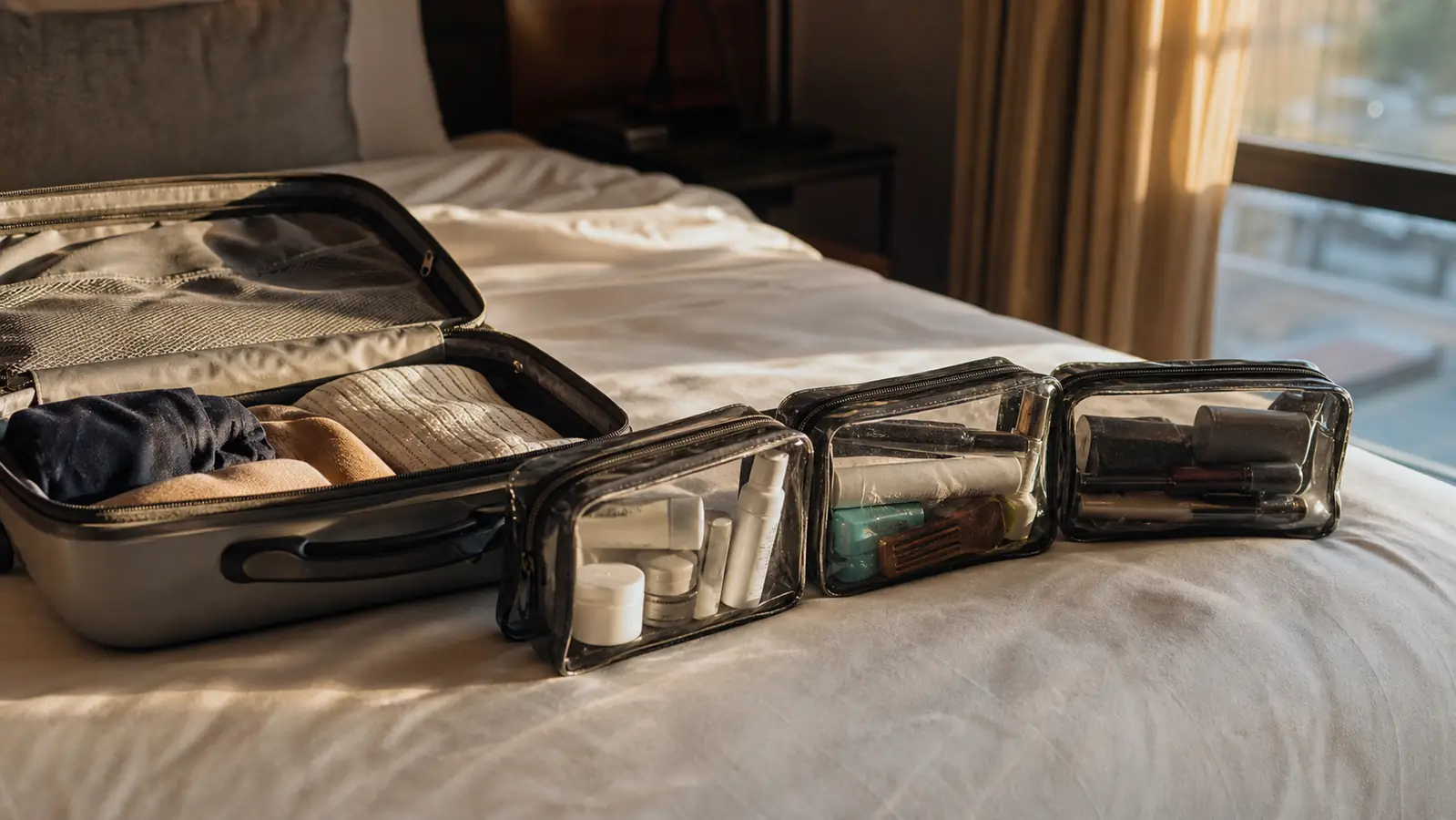
Before settling into this rotation, I used the free quart-sized ziplock bags TSA hands out at some checkpoints, and I also tried a generic clear pouch from a drugstore travel aisle. Neither survived past a handful of trips. The ziplock bags split at the seal after a few open-close cycles, especially once a bottle leaked, and the drugstore pouch had a zipper that separated from the seam entirely by trip four. I put this exact PACKISM set head to head against the free ziplock bag option in a full side-by-side comparison here, since that is the real alternative most travelers default to before they ever consider buying a dedicated bag.
I also looked briefly at hard-sided toiletry organizers with rigid walls, the kind built more for a bathroom shelf than a security tray. They hold their shape better than any PVC bag ever will, but they are bulkier, more expensive, and most of them are not clear, which means every one of them fails the actual job this category of product exists to do at a checkpoint. For carry-on liquids specifically, a rigid case solves a problem nobody has at security, while adding one you do not need.
The case for paying for a purpose-built bag instead of grabbing a free one at the checkpoint comes down to reuse. A free ziplock bag is designed to survive one trip, maybe two, before the seal gives out. This 3-pack survived fourteen checkpoints over eight months and is still in rotation. Once you divide the cost of the set across that many trips, the math favors buying once over grabbing a new free bag, or a new drugstore pouch, every single time yours fails.
What I Liked
- Zero secondary bag checks across 14 TSA checkpoints over 8 months, domestic and international
- Seams held completely through a mid-trip sunscreen leak in month 6
- Sized to the standard quart dimension, no oversized-bag conversations at checkpoints
- Heavier PVC than most drugstore pouches, holds its shape upright on a counter
- 3-pack allows a permanent daily bag plus separate seasonal and backup bags
- Still clear enough for an officer to see contents at a glance by month 8
Where It Falls Short
- The daily-use bag's zipper developed a slight stick starting around month 5
- One bag shows faint haze in a corner from repeated sunscreen residue
- No interior pocket or divider, though that is arguably the right call for checkpoint speed
- Only comes in clear, no size variety within the 3-pack
Zero secondary checks across fourteen checkpoints is the only number that actually matters for a bag whose entire job is to make the line move faster.
Who This Is For
This 3-pack makes the most sense for anyone who flies regularly enough that a free ziplock bag failing mid-trip is a genuine annoyance rather than a rare inconvenience. It suits carry-on-only travelers who want the security line to move fast and are tired of digging a crumpled bag out from the bottom of a backpack. It also works well for families, since three identical bags mean each person can carry their own without anyone borrowing from someone else's kit. If you have ever had a bottle leak inside a flimsy bag and ruin something else in your carry-on, the seam performance here is the specific problem this solves.
Who Should Skip It
Skip this set if you travel only once or twice a year and a free checkpoint bag is genuinely fine for your needs, since the value case here is built on reuse across many trips. It is also not the right pick if you want internal pockets or dividers to sort toiletries by type, since this is intentionally a single open compartment. And if you are checking every bag and never carrying liquids through a security checkpoint, the TSA sizing that this bag is built around simply does not apply to your trips, and a larger, non-quart-sized organizer would serve you better.
Ready to stop getting pulled aside for a bag the size of a small tote?
This is the same 3-pack of PACKISM clear toiletry bags that crossed fourteen TSA checkpoints with zero secondary checks in this review. See today's price and check current stock on Amazon.
Amazon Check Today's Price on Amazon →