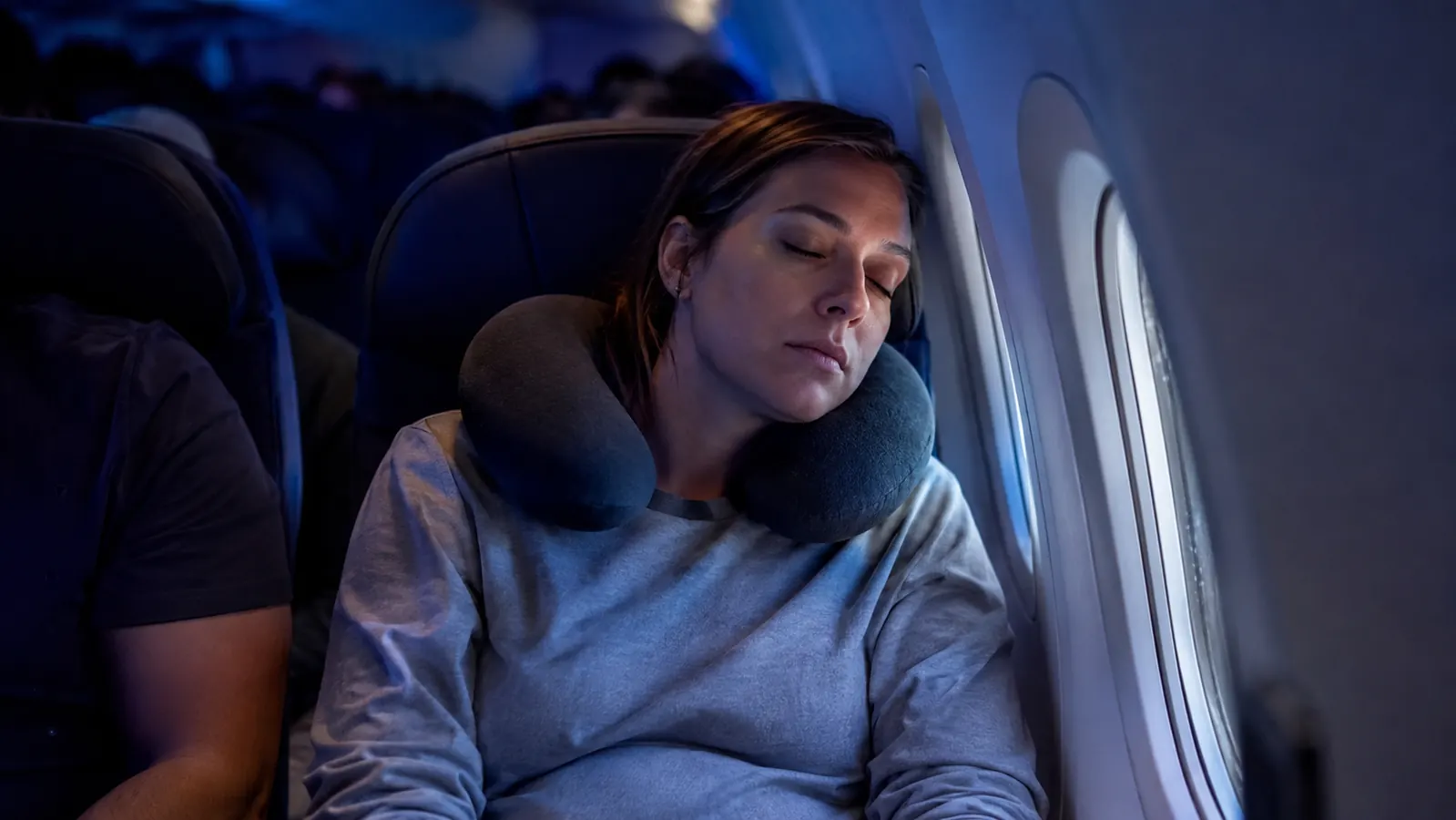
Six hours into a red-eye and your neck is doing that slow, aching bobble against the window every time the plane hits a rough patch of air. You dozed off twice, maybe three minutes at a time, and each time your head snapped forward hard enough to jolt you back awake. That is not sleep, it is a rough approximation of it, and it is exactly why so many people land from an overnight flight looking like they did not sleep at all. Getting real rest on a plane has less to do with how tired you are and more to do with whether your head has somewhere stable to rest through takeoff, turbulence, and every position shift for the next several hours. A dead-weight head with nothing supporting it will wake you up every fifteen minutes no matter how exhausted you are.
MLVOC is the neck pillow we ended up settling on after going through two inflatable pillows that deflated under the weight of a lolling head within an hour, and a shapeless foam ring from an airport newsstand that flattened out by the third flight. It is a memory foam pillow that ships with a 3D contoured eye mask and a pair of foam earplugs in the same package, which matters more than it sounds like once you are trying to build a full sleep setup at 35,000 feet instead of hunting down three separate items across three different airport shops. Below is the actual step-by-step setup we use now, built around that pillow, not a generic list of tips that assumes you already own the right gear.
This is not a list of vague comfort tips like wear loose clothing and bring a blanket. It is the specific order of operations we run through on every long flight now, from what to buy before you ever get to the airport to how to store the pillow so it still works a year later. Skip a step, like putting the mask on before the cabin dims or picking the wrong pillow shape for your seat, and the rest of the setup does not compensate for it. Follow the order and the difference between a red-eye that wrecks you and one you actually recover from ends up being pretty small.
Stop Rebuying the Cheap Inflatable Pillow Every Trip
A memory foam pillow that holds its shape for a full year of flights costs less per trip than three of the disposable ones you keep tossing in airport trash cans.
Amazon Check Today's Price on Amazon →Step 1: Pick a Pillow That Won't Flatten by Flight Three
Most of what ruins a neck pillow setup happens before you ever board, when you buy the wrong pillow for the job. Inflatable pillows pack small, but the air inside compresses under the weight of your head and gives you almost no support by hour two. Bead-filled pillows hold their shape a little longer but shift and lump up unevenly. Memory foam is slower to compress and it recovers its shape between flights instead of staying dented, which is the difference between a pillow that works on flight one and a pillow that still works on flight forty.
The MLVOC pillow uses a firmer foam density than most of the ten-dollar options we tried, and after a year of monthly flights the U-shape still snaps back within a few seconds of taking it off, instead of staying pressed flat the way a cheaper foam ring does after a few months. The chin strap is a small detail that gets overlooked in reviews, but it is the piece that actually stops your head from rolling forward once you fall asleep, which a plain foam collar with no strap cannot do.
Price matters here too, and it is worth being honest about what you are actually comparing. A cheap inflatable pillow at the airport newsstand looks like the cheaper choice until you are buying a replacement every second or third trip because the seams split or the valve stops holding air. A pillow that costs in the budget range once and keeps working for a year of monthly flights is the cheaper option by a wide margin, it just does not look that way at the register.
Step 2: Put the Pillow On Before You Even Sit Down
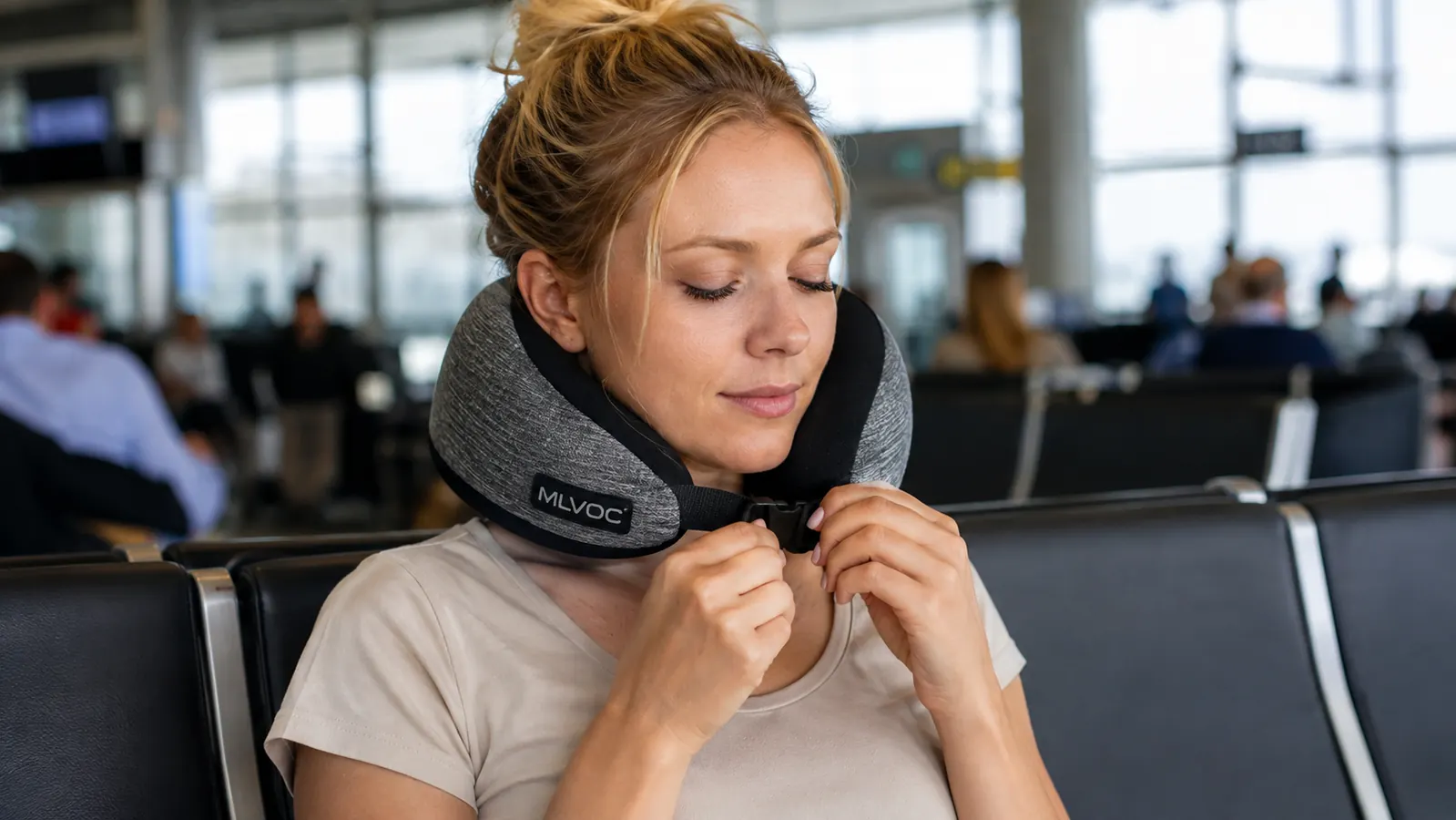
Waiting until the seatbelt sign turns off to dig your pillow out of your bag means you are setting it up during the most turbulent, most awkward part of the flight to be fumbling with straps. Put it on at the gate, or at the latest, right after you buckle in. That gives you a few minutes to adjust the fit while the plane is still on the ground and you are not being jostled by a drink cart.
Position the U-shape so the higher side sits toward the front of your chin, not centered on the back of your neck. Most people put it on backward the first few times and wonder why their head still falls forward. The gap in the U should sit at your throat, and the two raised sides should cup your jaw on each side so a forward head-drop has somewhere to stop before it happens.
Seat choice changes how you should position the pillow. In a window seat, angle the higher side of the U toward the window so your head can lean into the wall of the plane instead of drooping toward the aisle where a food cart or a passing flight attendant will clip your elbow. In an aisle seat, keep the pillow more centered and rely on the chin strap more heavily, since there is no wall to lean into and gravity is working against you from both sides.
Step 3: Pair It With an Eye Mask and Earplugs From the Start
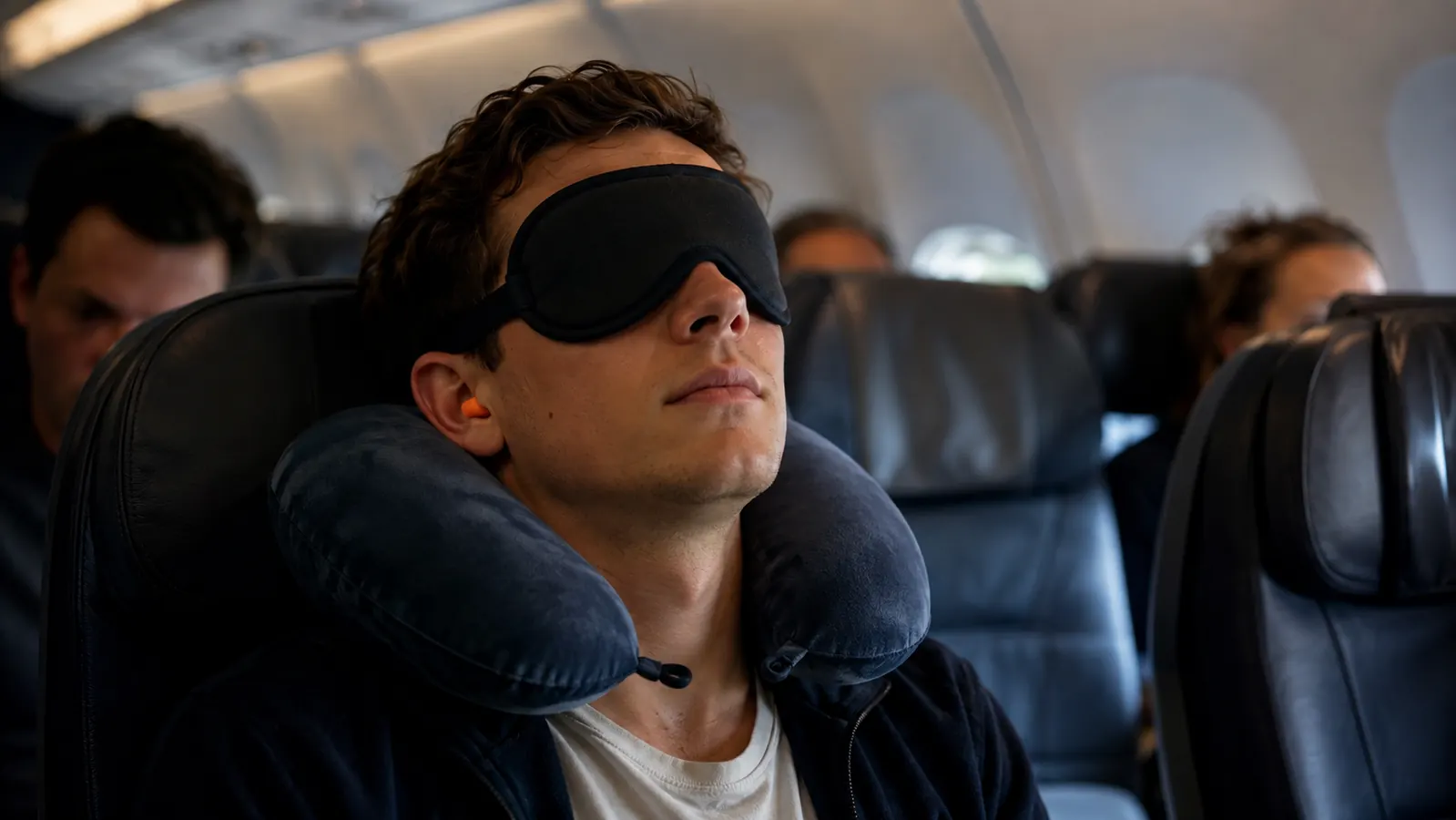
A neck pillow solves one problem: where your head goes when your neck muscles relax. It does not solve cabin lighting, the reading light three rows up, or the crying kid two seats over. That is why the MLVOC kit bundling a contoured eye mask and foam earplugs with the pillow actually changes the outcome, not just the packing list. Falling asleep on a plane is mostly about removing input, not adding comfort, and light and sound are the two biggest sources of input working against you.
Put the eye mask on before the cabin lights dim, not after, so your eyes are already adjusting to darkness when everyone else's phone screens come on for the descent into a movie or a game. Same with the earplugs. Put them in before takeoff so your ears have already adjusted to the muffled cabin roar instead of trying to block out sound that is already loud and irritating.
If you also travel with noise-canceling headphones, wear them over the earplugs rather than instead of them for a long overnight flight. The combination blocks both the low engine drone that headphones handle well and the higher-pitched cabin chatter and crying that earplugs catch better. It sounds like overkill until you have tried falling asleep next to a toddler on hour two of an eight-hour flight with only one layer of noise blocking.
Step 4: Time Your Setup to the Cabin, Not Your Own Clock
Your body does not care what time zone you left from, it cares what the cabin looks and sounds like right now. If the flight attendants have dimmed the lights and most of the cabin has gone quiet, that is your window, whether it is 9pm or 3am on your home clock. Waiting for a specific bedtime that does not exist at 35,000 feet just means you miss the actual quiet window and end up trying to fall asleep during meal service instead.
Recline your seat as far as the person behind you can tolerate, angle your body slightly toward the window or the aisle rather than straight up, and skip the coffee after the first hour of the flight even if the free refills feel like a reason to keep drinking them. None of this works if you are still buzzing on caffeine when the cabin finally goes dark.
A lot of people reach for melatonin or an over-the-counter sleep aid to force the issue, and that is a personal call, but it works far better as an addition to this setup than a replacement for it. Taking a sleep aid with your head still bouncing around unsupported just means you are unconscious and uncomfortable instead of awake and uncomfortable. Get the physical setup right first, then decide if you still need help falling asleep on top of it.
Step 5: Maintain the Pillow So It Still Works on Trip Twenty
The cover on the MLVOC pillow zips off and is machine washable, which matters after enough overnight flights that it has absorbed a fair amount of drool, hair product, and airplane air. Wash it every handful of trips on a cold, gentle cycle and let it air dry rather than tossing it in the dryer, which can warp the foam underneath faster than normal wear does.
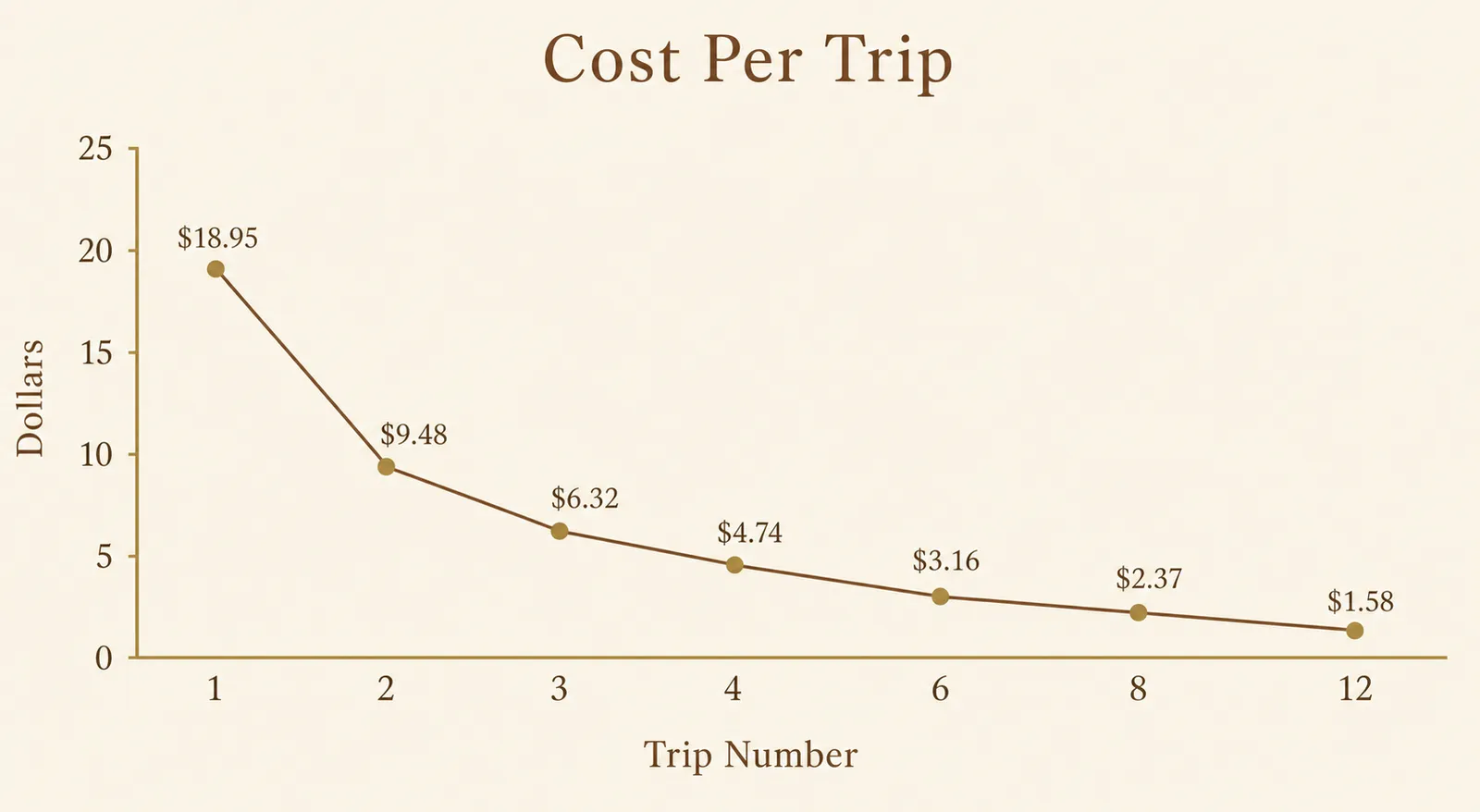
Store it loose in your bag rather than crushed under heavier items, since foam that gets compressed for days at a stretch during transit takes longer to bounce back than foam that gets a little relief between trips. At $18.95, the pillow works out to about $1.58 a trip if it lasts a year of monthly flights, which is the actual math worth comparing against the six-dollar inflatable pillows you would otherwise be rebuying at every airport newsstand.
Most people get somewhere between twelve and eighteen months of regular use out of a memory foam travel pillow before the foam stops recovering its shape as quickly as it used to. That is not a defect, it is just foam doing what foam eventually does. When you notice it staying flatter for longer after you take it off, that is the signal to replace it rather than waiting for it to fail completely on a flight.
What Else Helps
A good neck pillow fixes head support, but it will not fix a seat that has zero recline or a middle seat with an armrest hog on both sides. A thin packable blanket or a pair of compression socks solves a different piece of the same problem, temperature and circulation rather than head position, and neither takes up meaningful space in a carry-on. If you want the full case for why a neck pillow is worth packing on every trip rather than just the long-haul ones, we broke down 10 reasons a travel neck pillow is worth buying in more detail. And if you are trying to decide between a budget foam pillow and a pricier inflatable option, our head-to-head comparison against the Cabeau Evolution covers where the extra cost actually buys you something and where it does not.
Seat selection also does more work than people give it credit for. An aisle seat gets you out to stretch and use the restroom without waking a stranger, but a window seat gives you a wall to lean against, which matters more than legroom if sleep is the actual goal of the flight. If you are booking ahead, pick based on which one of those two things you need more on that specific trip, rather than defaulting to the same seat type every time out of habit.
The pillow does not put you to sleep. It just makes sure that when you do fall asleep, your head has somewhere to go besides straight into the tray table.
Pack the Pillow That's Still Doing Its Job a Year Later
Between the foam that holds its shape, the chin strap, and the eye mask and earplugs already included, this is the one item in your travel kit you stop thinking about once it is in your bag.
Amazon Check Today's Price on Amazon →