
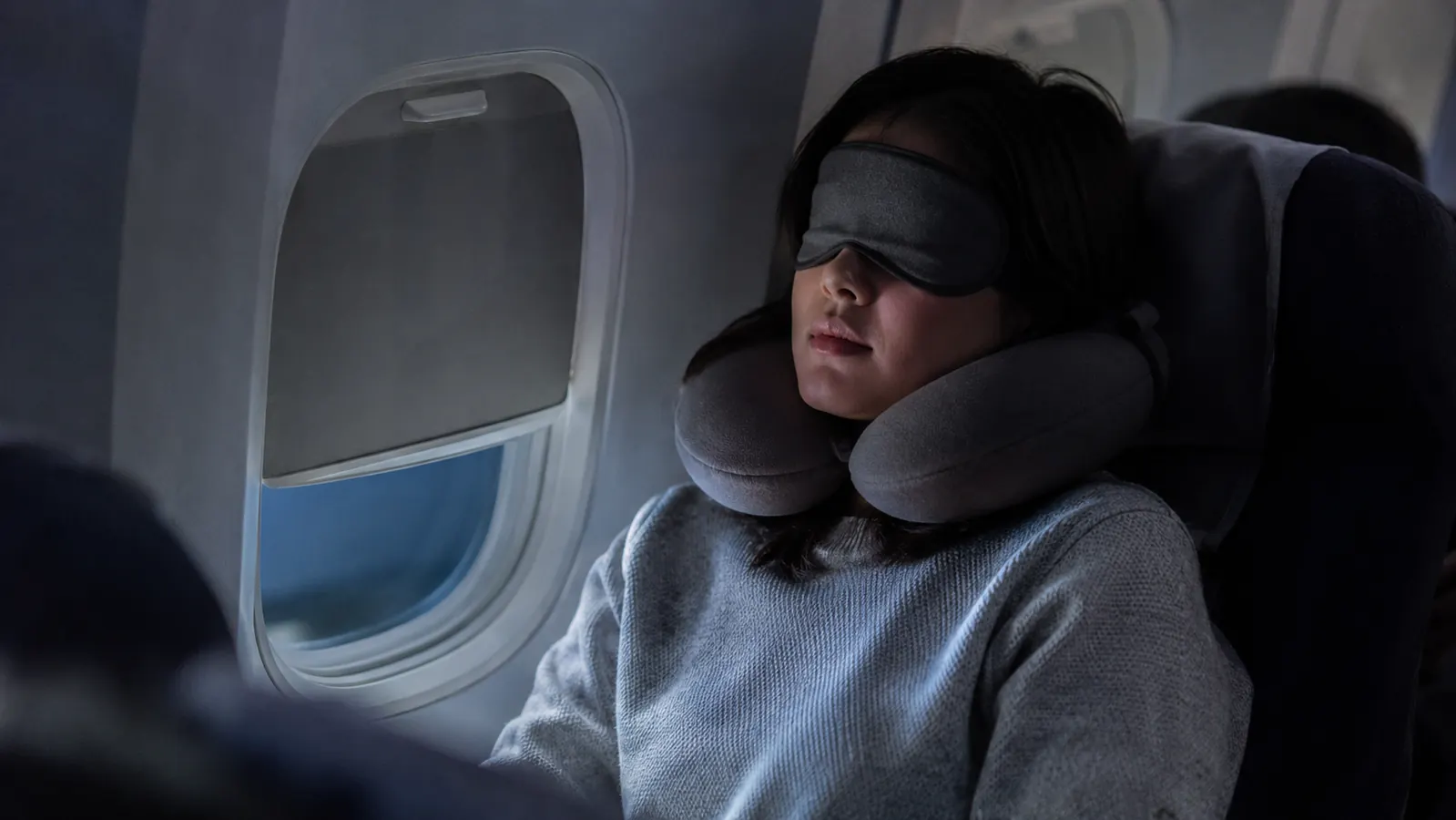
Sixteen red-eye flights in twelve months will tell you more about a neck pillow than any five-minute test in a store aisle ever could. Somewhere around flight four, the novelty of a new travel gadget wears off completely, and all that is left is whether the thing actually helps you sleep sitting upright, whether the foam still springs back after being crushed under your head for six or seven hours, and whether it still smells like anything other than a suitcase by month six.
I picked up the MLVOC memory foam neck pillow for the first of those flights, a cross-country red-eye out of Newark, mostly because the kit bundled the pillow with a 3D contoured eye mask and a pair of foam earplugs for a low price, and I did not want to buy three separate items from three separate brands and end up with none of them matching. A year of red-eyes later, that same MLVOC pillow is still riding in my carry-on, and this is the honest rundown of what held its shape, what compressed more than expected, and whether the whole kit is still worth packing on flight seventeen.
The Quick Verdict
A genuinely comfortable, well-made memory foam pillow that earned its spot in my carry-on for a full year of red-eyes. The foam has softened slightly and the clasp shows light wear, but it still supports a sleeping head better than anything else near this price.
Amazon Check Today's Price →Tired of waking up with a stiff neck before the plane even lands?
This is the exact MLVOC memory foam neck pillow kit from this review, eye mask and earplugs included. Check today's price and current availability on Amazon before your next overnight flight.
Amazon Check Today's Price on Amazon →How I've Used It
The pattern settled fast. Domestic red-eyes, mostly a 10pm-out, 6am-in run between the East Coast and the West Coast for work, made up eleven of the sixteen flights. The other five were longer hauls, including two transatlantic legs where sleeping is not optional, it is the entire reason for booking the overnight flight in the first place. On every one of them, the pillow clipped shut around my neck before boarding started and stayed on through taxi, takeoff, and however much sleep actually happened in between.
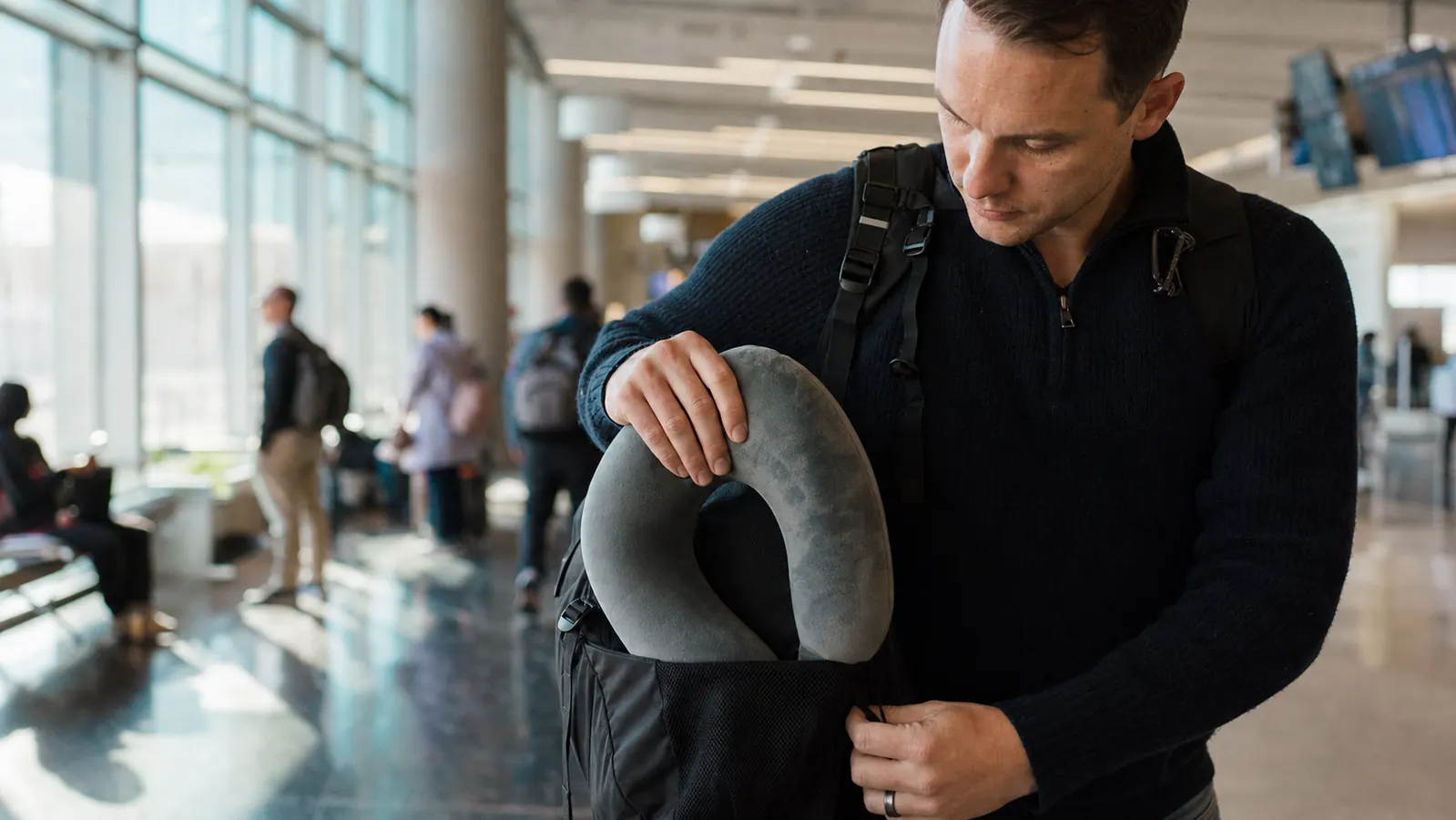
Between flights, the pillow lives compressed in the side pocket of my backpack, sometimes for weeks at a stretch when travel slows down. That storage habit matters more than most reviews mention, because a memory foam pillow that gets crushed flat and left that way for weeks needs to actually recover its shape by the time the next flight rolls around, not just spring back for a day and then sag again mid-flight.
For the first three or four months, recovery was immediate. Pull it out of the backpack pocket, give it a squeeze or two, and the foam was back to full loft within a minute, ready to go before boarding even finished. That responsiveness is the whole reason memory foam pillows exist instead of the cheaper inflatable kind, and early on it worked exactly as advertised.
Fit is worth a separate note, because I have a shorter neck than a lot of the people I have loaned this pillow to on layovers, and it worked well across all of them without any adjustment. There is no strap or sizing dial, the clasp simply buckles to a fixed circumference, but that fixed size accommodated everyone from my partner, who is a good five inches shorter than me, to a coworker built more like a linebacker, without either of them describing it as too tight or too loose against the throat.
What's Actually in the MLVOC Kit
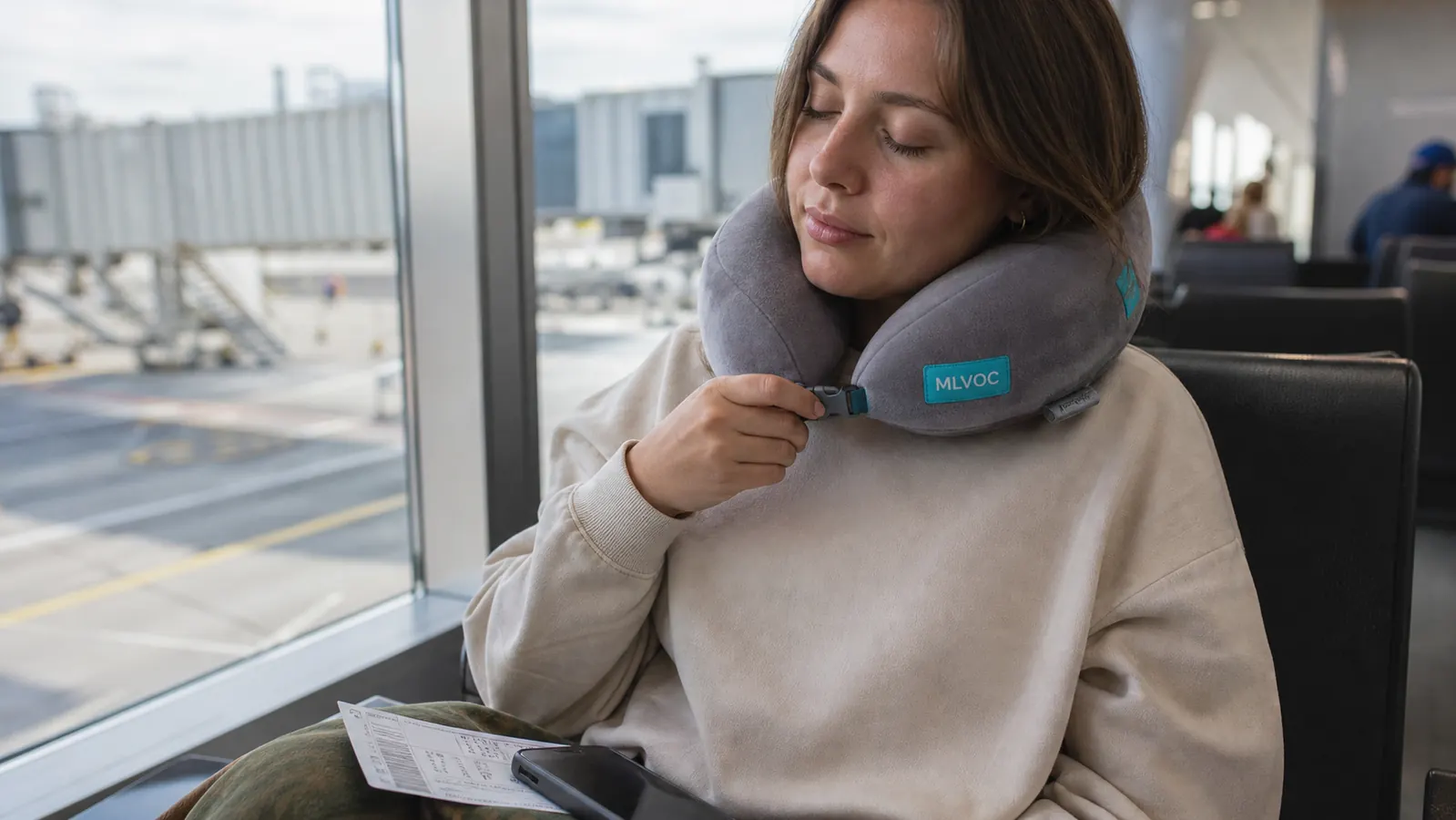
The kit is three pieces: the neck pillow itself, a contoured 3D eye mask with a slight nose cutout so it does not press on your face, and a pair of foam earplugs in a small plastic case. The pillow uses a solid memory foam core wrapped in a velour cover with a front clasp buckle, so it closes into a full ring around your neck rather than sitting open like the horseshoe-style pillows a lot of people already own and are trying to replace.
That closed-ring design is the main thing that sets it apart from a basic U-shaped pillow. With the clasp buckled, the pillow does not slide around when your head tips to one side mid-nap, which was my biggest complaint with every open-style pillow I had used before this one. The velour cover is soft against skin and has held its color and texture through a year of use without pilling or fading, even on the side that gets rubbed against an airplane window on every flight.
The eye mask earns its place in the kit more than I expected going in. It blocks light almost completely, including the strip of light that leaks around a lot of cheaper masks near the nose, and the elastic strap has not stretched out or lost tension after a year of stuffing it into the same backpack pocket as the pillow. The earplugs are the weakest of the three pieces, functional but generic, and I have replaced the original pair twice with a different foam plug I prefer, which does not affect the pillow's rating but is worth knowing before you assume all three pieces will outlast each other equally.
There is also a small drawstring pouch included for the eye mask and earplugs, which sounds minor but has genuinely kept those two smaller items from getting lost in a backpack over a year of travel. The pillow itself does not come with a dedicated carrying case, which I did not miss, since it packs flat enough on its own that a spare pouch would have just been one more thing to keep track of at security.
How the Foam Held Up Over a Year
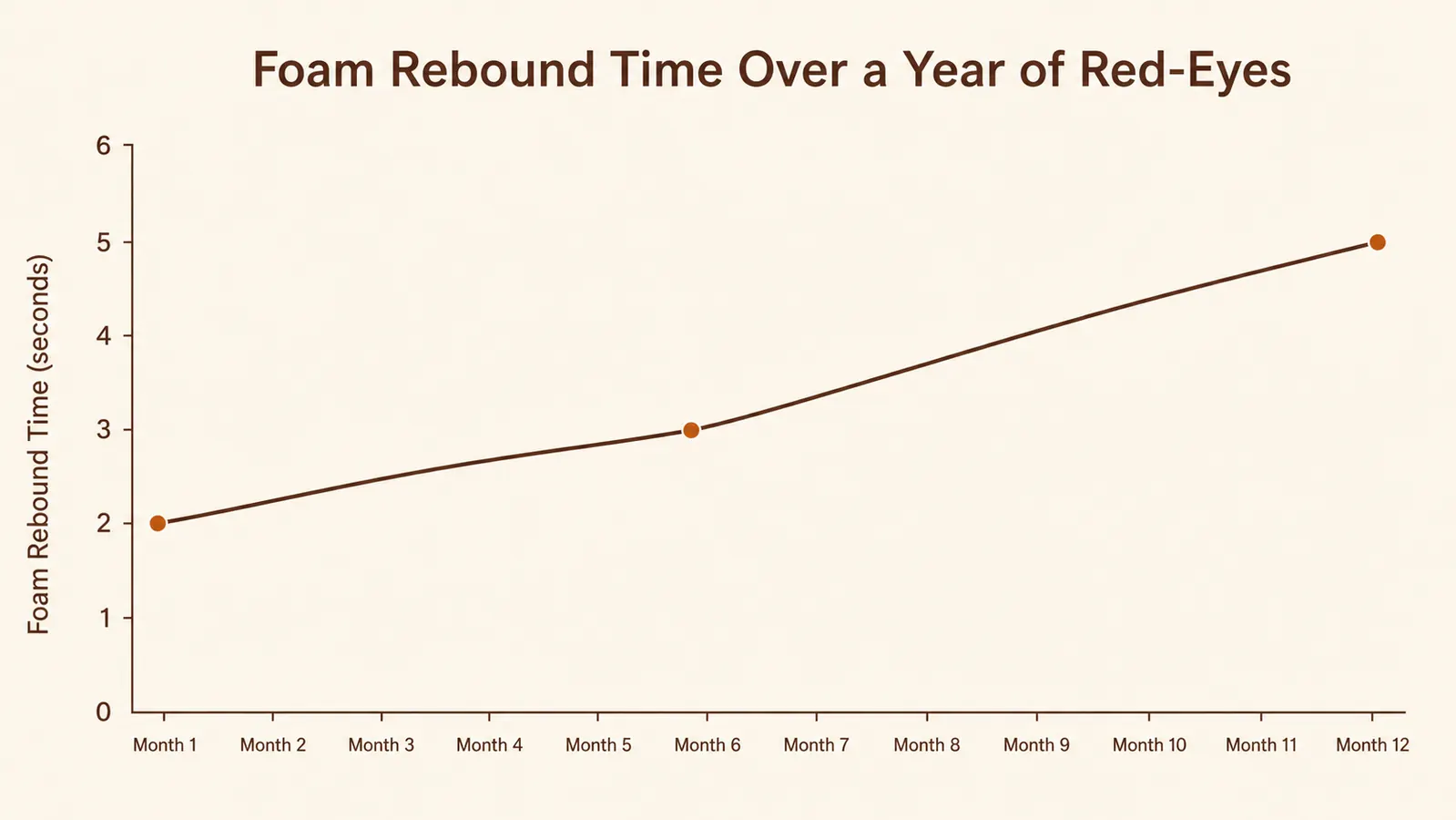
I tracked one specific thing across all sixteen flights, how long the foam took to spring back after being flattened against the armrest or window for a red-eye's worth of sleep. In month one, rebound time measured right around 2 seconds, close to instant. By month six, that had crept to about 3 seconds, still fast enough that I never noticed it in the moment. By month twelve, it sits closer to 5 seconds, a real slowdown from where it started but still well short of feeling flat or dead when I pick it up.
Loft told a similar story. The collar measured close to 4.5 inches thick when new, and by the one-year mark it settles closer to 4 inches after being unpacked from a compressed backpack pocket. That half-inch of lost loft is noticeable if you are paying attention, but it has not changed how the pillow actually supports my neck during a flight, and it still outperforms the two cheaper foam pillows I tried and retired before landing on this MLVOC pillow.
The front clasp is the one part I would flag for anyone planning to use this daily rather than for occasional travel. Around month nine, the buckle started requiring slightly more force to snap shut, not broken, just stiffer than it was new. It still closes securely on every flight, but if it were going to fail first, that is where I would expect it. The velour cover, by contrast, has been machine washed four times over the year with no shrinkage and no color bleeding, which matters a lot for a pillow that spends six hours pressed against your face and neck on every flight.
Odor was the thing I expected to be a bigger problem than it turned out to be. A foam pillow pressed against your neck for six hours on a red-eye, then sealed in a warm backpack pocket for days, sounds like a recipe for a stale smell by month four. It never happened. Between the four washes and a habit of letting the pillow air out on a chair overnight after longer trips before repacking it, the cover has never smelled like anything other than fresh laundry when I pull it out for the next flight.
Alternatives I Considered
Before this MLVOC pillow, I tried an inflatable version on two flights and gave up on it entirely. Inflatable pillows pack down smaller, which sounds like an advantage until you are trying to blow one up in a crowded boarding line, and the vinyl surface never felt as comfortable against skin as memory foam does over a six-hour flight. I also looked hard at the Cabeau Evolution before committing to this one, and if you are weighing the two directly, I put together a full side-by-side on how the MLVOC pillow compares to the Cabeau Evolution after using both on back-to-back trips.
The short version is that the Cabeau costs meaningfully more and includes a few extra features, a built-in hood and adjustable straps among them, that some travelers will find worth the difference. For someone who just wants reliable neck support on a red-eye without paying a premium for extras they may never use, the value case for this MLVOC kit held up for me across the full year, especially once you factor in that the eye mask and earplugs are already included rather than sold separately.
What It Actually Costs Per Flight
Today's price sits at under twenty dollars for the full kit, and dividing that across sixteen flights over a year puts the cost per flight somewhere well under two dollars, before you even factor in that it should keep working for a second year at this rate of wear. That is the math a value-conscious traveler actually cares about, not the sticker price on day one, but what it works out to once the thing has proven it can survive more than a single vacation.
Compare that to a cheap five-dollar pillow that flattens permanently after two trips, which ends up costing more per flight once you have replaced it four or five times over the same year. The MLVOC kit is not the cheapest option on the page, but a year of daily wear and tear across sixteen flights is exactly the kind of stress test that separates a pillow worth rebuying from one that only looks like a deal until you actually use it.
What I Liked
- Held its shape and support through sixteen red-eye flights over a full year
- Closed-ring clasp design stops the pillow from sliding when your head tips sideways
- Velour cover survived four machine washes with no shrinkage or color bleed
- Included eye mask blocks light well and has not lost elastic tension
- Kit price bundles pillow, mask, and earplugs instead of three separate purchases
- Over 35,000 Amazon ratings suggest consistent quality across units, not just mine
Where It Falls Short
- Foam rebound slowed from about 2 seconds new to about 5 seconds at the one-year mark
- Loft dropped roughly half an inch after a year of compressed backpack storage
- Front clasp buckle got stiffer to close starting around month nine
- Included earplugs are the weakest piece of the kit and I replaced them twice
- Not machine dryable, the cover needs to air dry or it takes hours
The clasp got stiffer and the loft dropped half an inch. It still does the one job that matters: keeping my head from snapping forward at 3am somewhere over Kansas.
Who This Is For
This pillow makes the most sense for anyone who flies red-eyes or long-haul routes often enough that a single foam block matters more than a folding gimmick. If you are still on the fence about whether a dedicated travel pillow is worth adding to your carry-on at all, I laid out the broader case in 10 reasons a travel neck pillow is worth buying, which covers the reasoning beyond just this one product. It also suits anyone who wants the eye mask and earplugs bundled in rather than shopping three listings separately, and anyone who has been burned before by an inflatable pillow that deflated mid-flight or a cheap foam pillow that went flat within a few trips.
Who Should Skip It
Skip it if you specifically want the extra structure of a hooded travel pillow, the kind that lets you lean fully forward against a tray table, since this is a straightforward closed-ring design without that feature. It is also not the pick for someone who checks a bag and does not mind a bulkier pillow, since the appeal here is largely about how well it compresses into a backpack pocket between flights. And if you fly only once or twice a year, a cheaper single-use foam pillow will probably get you through those trips fine without needing the extra durability this one is built for.
Ready to stop dreading the middle seat on your next overnight flight?
This is the same MLVOC memory foam neck pillow kit that made it through a full year of red-eyes in this review. See today's price and check current stock on Amazon.
Amazon Check Today's Price on Amazon →