
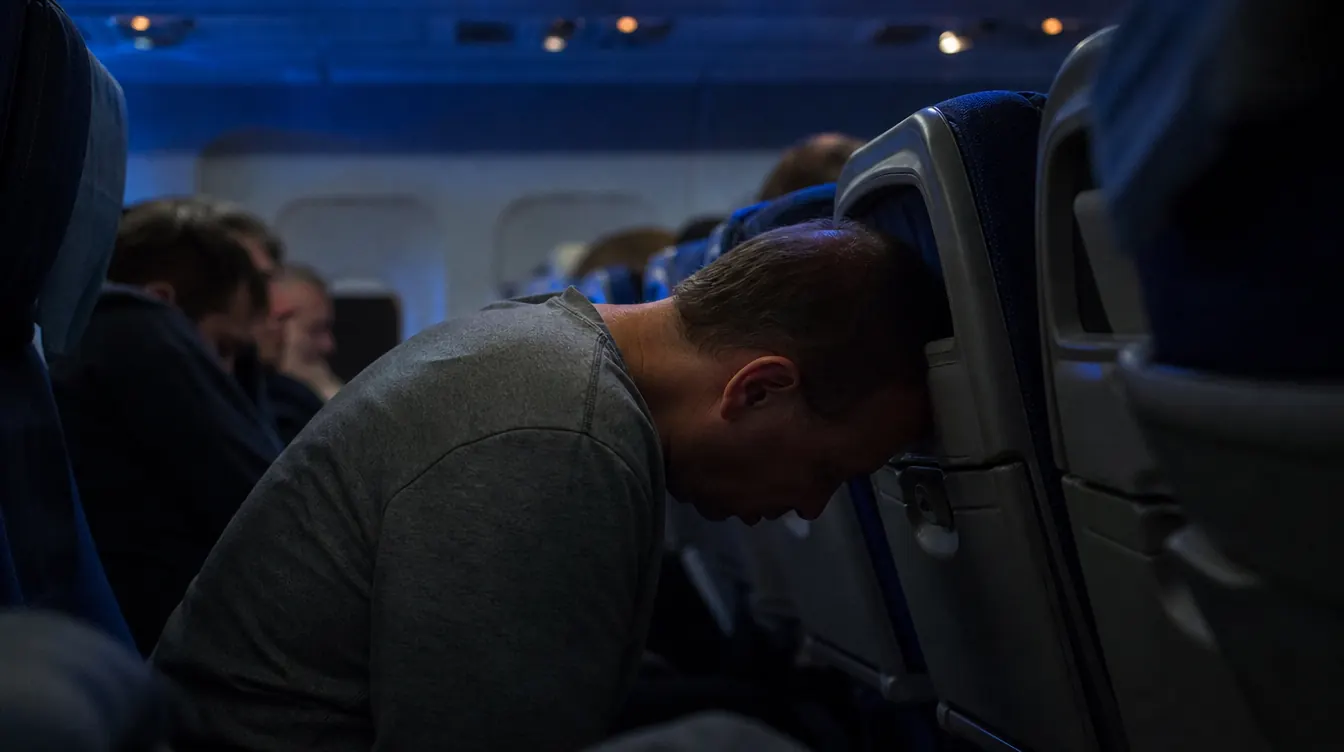
The overnight flight from Newark to Reykjavik was six hours, boarding at 11:40 at night, and I spent the whole leg sitting bolt upright, head snapping forward every time I drifted off. I did not own a neck pillow and never thought I needed one. By hour four I understood why every third person in that cabin had one wrapped around their neck while I sat there with a stiff jaw.
This was not my first red-eye, but it was the first overnight leg that actually mattered, with an early landing and a full day of walking planned right after. I assumed I would sleep the way I always had on planes, badly but well enough to function.
I did not sleep. My neck locked somewhere between awake and concussed for most of the flight, and I landed with a headache that took most of the day to shake. Standing at baggage claim rubbing my neck, I decided it was time to spend a little on fixing this, so on the ride home I started reading neck pillow reviews, and the name that kept coming up was MLVOC.
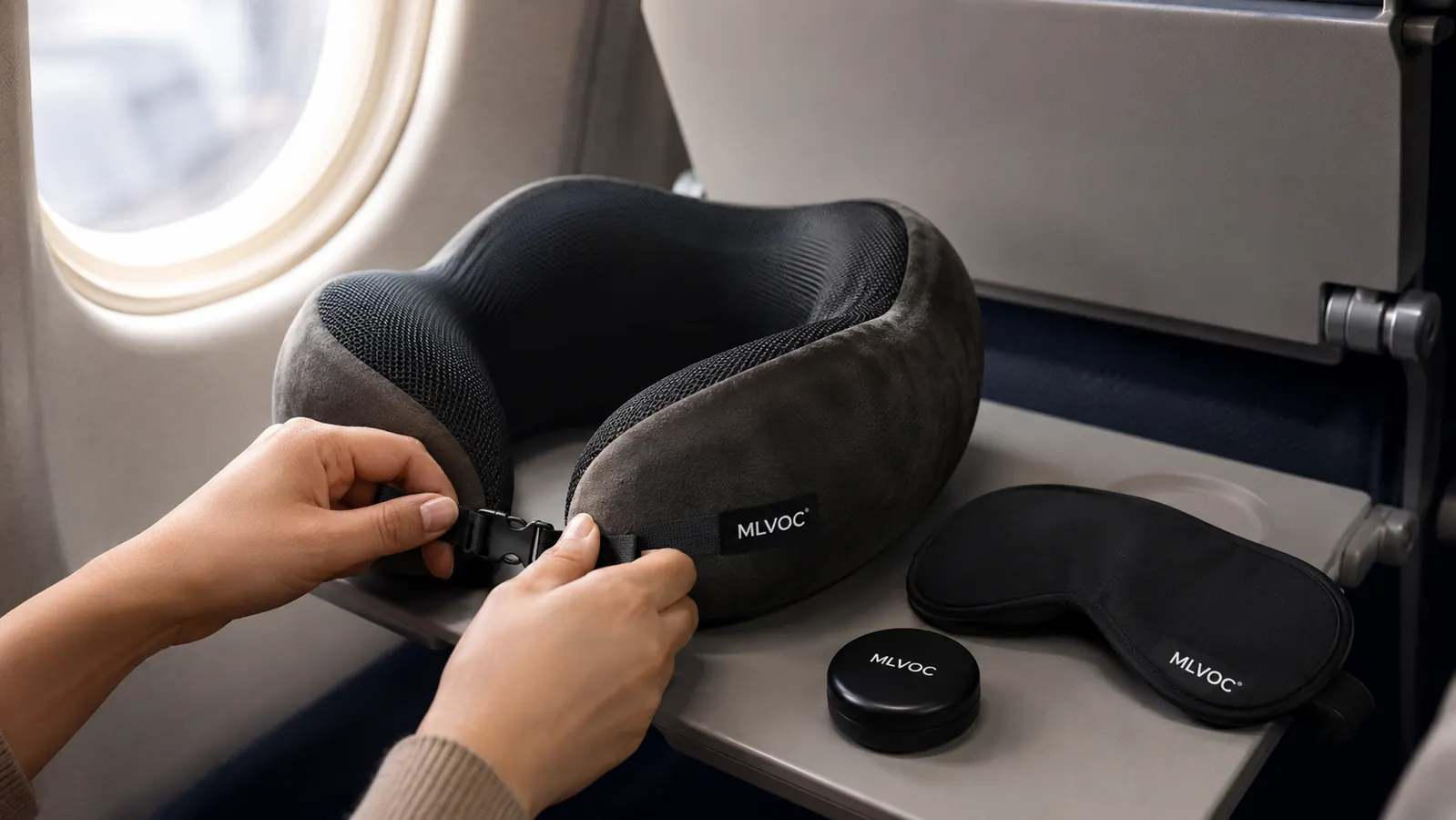
The one I eventually bought was the MLVOC Airplane Travel Neck Pillow kit, the one that comes with a 3D contoured memory foam pillow, a proper eye mask, and a pair of earplugs in one case for under 20 dollars. I had seen plenty of neck pillows priced higher with none of that included, and a review count well into the tens of thousands made it feel like less of a gamble than most of what I had already scrolled past.
It showed up four days before my next trip, a shorter one but still an evening departure, and I tested it on the plane instead of practicing at home the way I probably should have. The foam had more structure than I expected, firm enough to actually hold my head in place instead of collapsing flat the way a cheap pillow does after twenty minutes of being leaned on.
That first flight was only two hours, barely enough to test anything, but even on a short hop I noticed I did not have to keep readjusting every few minutes the way I did with a rolled-up sweater or the free airline pillow. The elastic strap in the back held the pillow snug enough that it did not slide down my chest every time I nodded off, which had been the actual failure point with every free pillow I had ever used.
I had spent years assuming neck pillows were a novelty item for nervous flyers, right up until one bad overnight flight taught me they were closer to a piece of equipment.
Tired of landing with a headache and a neck you can barely turn?
The MLVOC neck pillow kit is what finally fixed my overnight flights, eye mask and earplugs included. See today's price on Amazon before your next red-eye.
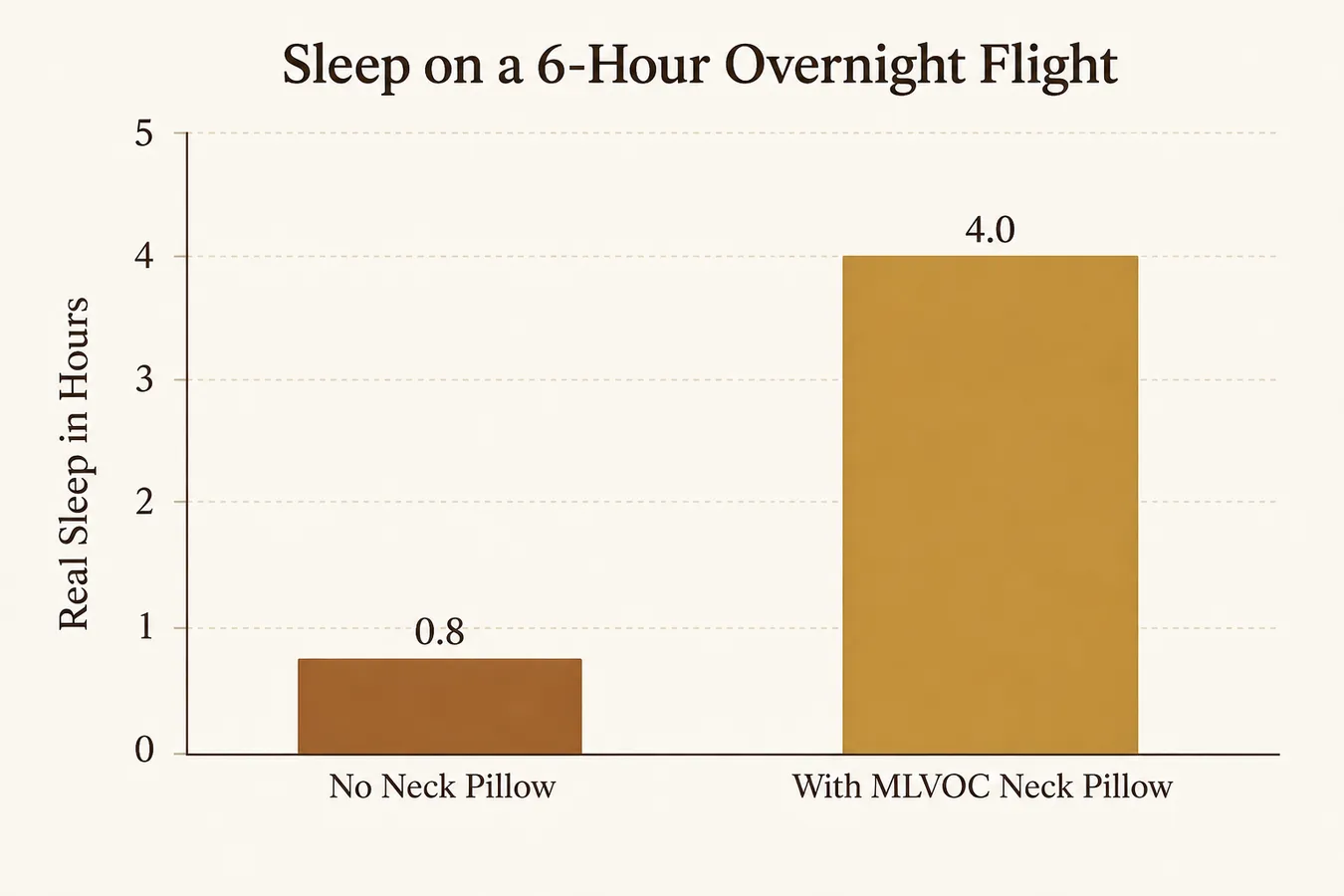
Amazon Check Today's Price on Amazon →The real test came a few months later on another overnight leg, six hours again, roughly the same route home. I fell asleep somewhere over the Atlantic and stayed asleep, on and off, for close to four hours out of the six, which sounds unremarkable until you have spent a flight getting under an hour of broken rest with your chin bouncing off your chest every few minutes. That gap, close to four hours against less than one, is the whole reason the pillow earned a permanent spot in my carry-on.
The eye mask and earplugs turned out to matter almost as much as the pillow itself, which I did not expect going in. Cabin lights during meal service and the general hum of an aircraft had always been part of why I never slept, and having all three pieces in one kit meant I was not digging through three different pockets at 1am trying to find a mask I half remembered packing. I go into more detail on how the mask, plugs, and seat angle work together in how to sleep better on flights with a neck pillow.

I will say the strap takes a trip or two to get used to, and the pillow itself is bulky enough that it eats a bit of space in a smaller carry-on if you are not clipping it to the outside. Neither of those is close to a dealbreaker for me, but I would rather tell you plainly than pretend the MLVOC kit is perfect out of the box. I broke down the foam density and how the cover has held up after regular use in a separate honest review, if you want the fuller picture before buying.
I also started packing it clipped to the outside strap loop on my carry-on instead of stuffed inside, which freed up almost a full packing cube's worth of space and meant I was not digging around for it while boarding. It is a small thing, but on a red-eye departing at midnight, small things are the difference between finding your seat calmly and holding up the aisle while everyone behind you watches.
It has now been through something like a dozen flights, several of them overnight, and the foam has not gone soft or lost its shape the way a cheap pillow does after a handful of trips through a checked bag or an overhead bin. That was really the question I had going in, whether this would hold up or turn into another drawer item after a couple of uses, and a dozen flights in, it has not.
What I'd Tell You If We Were Sitting at My Kitchen Table
If you asked me straight, I would tell you this will not turn a bad flight into a great one, nothing does that. What it does is take a six-hour overnight leg from close to zero real sleep to something you can actually function on the other side of. For under 20 dollars, with the mask and earplugs already included, it has more than paid for itself in headaches I did not get and days I did not lose to jet lag recovery. I would rather pack it and not need it than land in Reykjavik that stiff again.
If you have ever landed from a red-eye with a headache you didn't need, you already know why I carry this now.
See the current price on the MLVOC neck pillow kit and what's included on Amazon before your next overnight flight.
Amazon Check Today's Price on Amazon →