
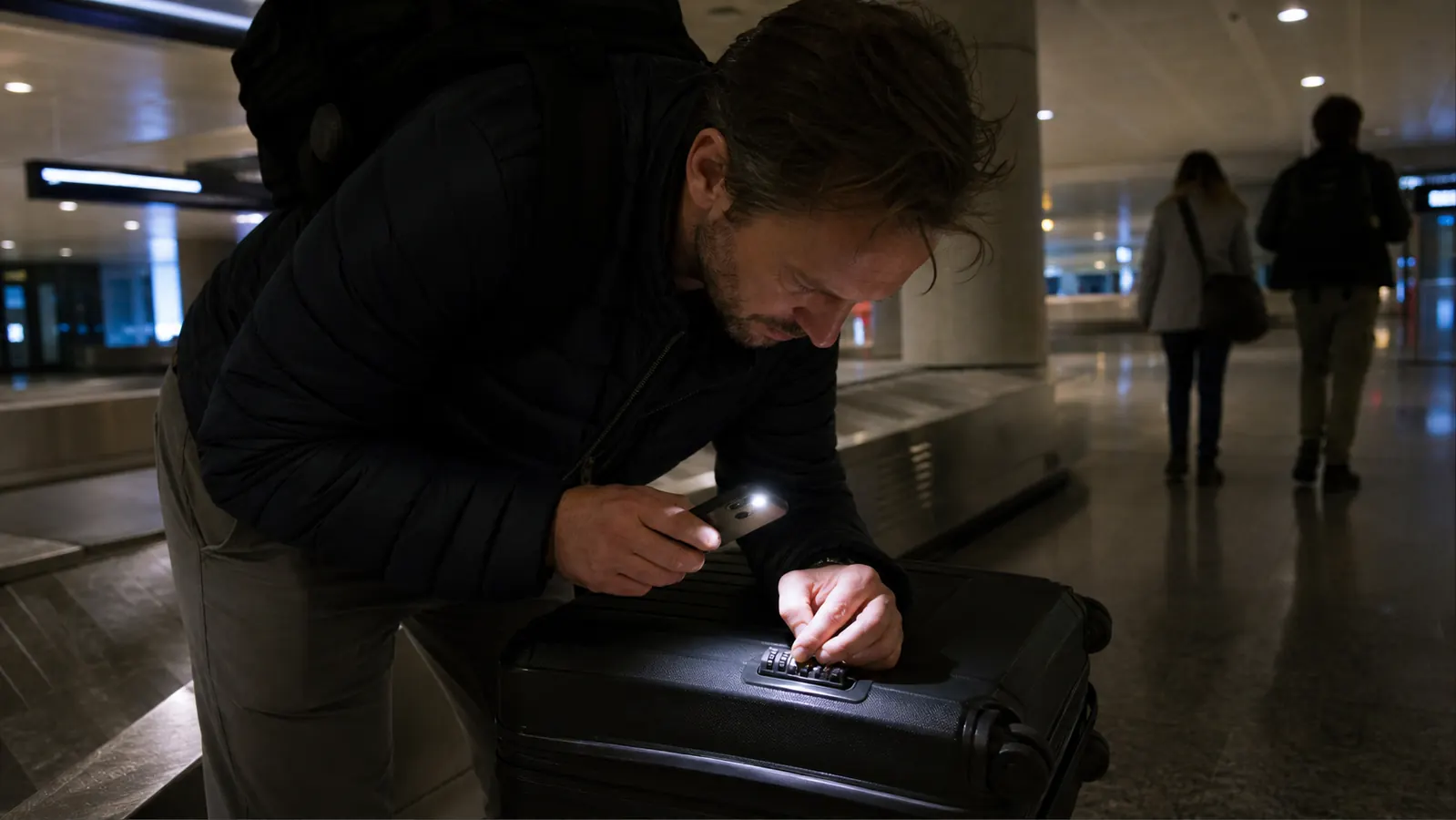
Eighteen months ago I bought two TSA-approved luggage locks off Amazon without reading past the first page of reviews, because I needed something on my suitcase before a 6 AM flight to Chicago and the drugstore rack only had unmarked padlocks that airport security has been known to just cut off. What I did not read, buried past the star ratings, were the details that actually matter once your bag has gone through screening a couple dozen times. What happens when TSA does not relock it. What the reset instructions leave out. And how fast the numbers you are squinting at in dim baggage claim lighting actually wear down.
This review is not about whether the lock clips onto a zipper and holds, it does, that part is not in question. It is about the stuff that only shows up after real use, the kind you do not find in a product listing or a five-star review written the week someone unboxed it. I have now run this exact SURE LOCK TSA Approved Luggage Lock, the version with the open alert indicator, across 31 checked-bag trips in eighteen months, and I want to walk through what nobody mentions before you buy it.
The Quick Verdict
A capable, inexpensive lock with one genuinely useful feature and a handful of small honesty gaps in how it is marketed. Worth buying, but go in knowing what it will not do and what the reset process actually requires.
Amazon Check Today's Price →Before you buy another TSA lock based on the star rating alone, see what actually happens after two dozen trips.
This is the exact SURE LOCK TSA-approved lock covered in this review. Check today's price and current availability on Amazon.
Amazon Check Today's Price on Amazon →How I've Used It
My use case is ordinary. One lock rides on my main checked suitcase, the other has mostly stayed in a kitchen drawer as a spare since the first one has not needed replacing. I fly for work roughly twice a month and take two or three personal trips a year, which is how eighteen months turned into 31 checked-bag trips, everywhere from a work conference in Chicago to a family trip to Cancun to a rushed connection through a hub airport with forty minutes to make the next gate. I did not set out to write a formal test. I just kept a note on my phone every time something about the lock surprised me, good or bad, and eighteen months later that note had enough on it to be worth sharing.
What follows is organized around the things that surprised me, not around a feature-by-feature spec sheet. Some of it makes the lock look better than the marketing does. Some of it does not, and I would rather you hear that from someone who has actually used it than find out mid-trip.
What TSA-Approved Actually Means, and What It Doesn't
The phrase TSA-approved gets used loosely, and the product page leans into that a little. What it actually means is that TSA has a master key that fits the lock, so an agent can open your bag for a physical inspection without cutting the lock off. That is the whole guarantee. It is not a claim that the lock will stop a determined thief, and it is not a security certification in the way a home safe rating is. The shackle on this lock is a thin loop of steel sized to hold zipper pulls together, and its real job is deterrence, keeping a zipper from working itself open under pressure in a packed cargo hold and discouraging someone from casually trying a bag that is not theirs. Anyone shopping for this lock expecting it to actually stop a professional theft attempt is shopping for the wrong product, and to be fair to SURE LOCK, nothing in the fine print claims otherwise. It is the loose way this category gets marketed in general that sets the wrong expectation, not this specific listing.
I mention this because the honest value of this lock is in what it prevents day to day, not in some worst-case scenario. Across 31 trips, it never once looked like it stopped a determined attempt at anything. What it did was keep a duffel bag zipper from popping open on a rough baggage carousel drop, and it gave me a reason not to lie awake wondering whether my suitcase was sitting open somewhere between gates. That is a smaller promise than the marketing photos imply, and it is worth knowing that going in.
The Reset Instructions Nobody Reads Until They're Stuck
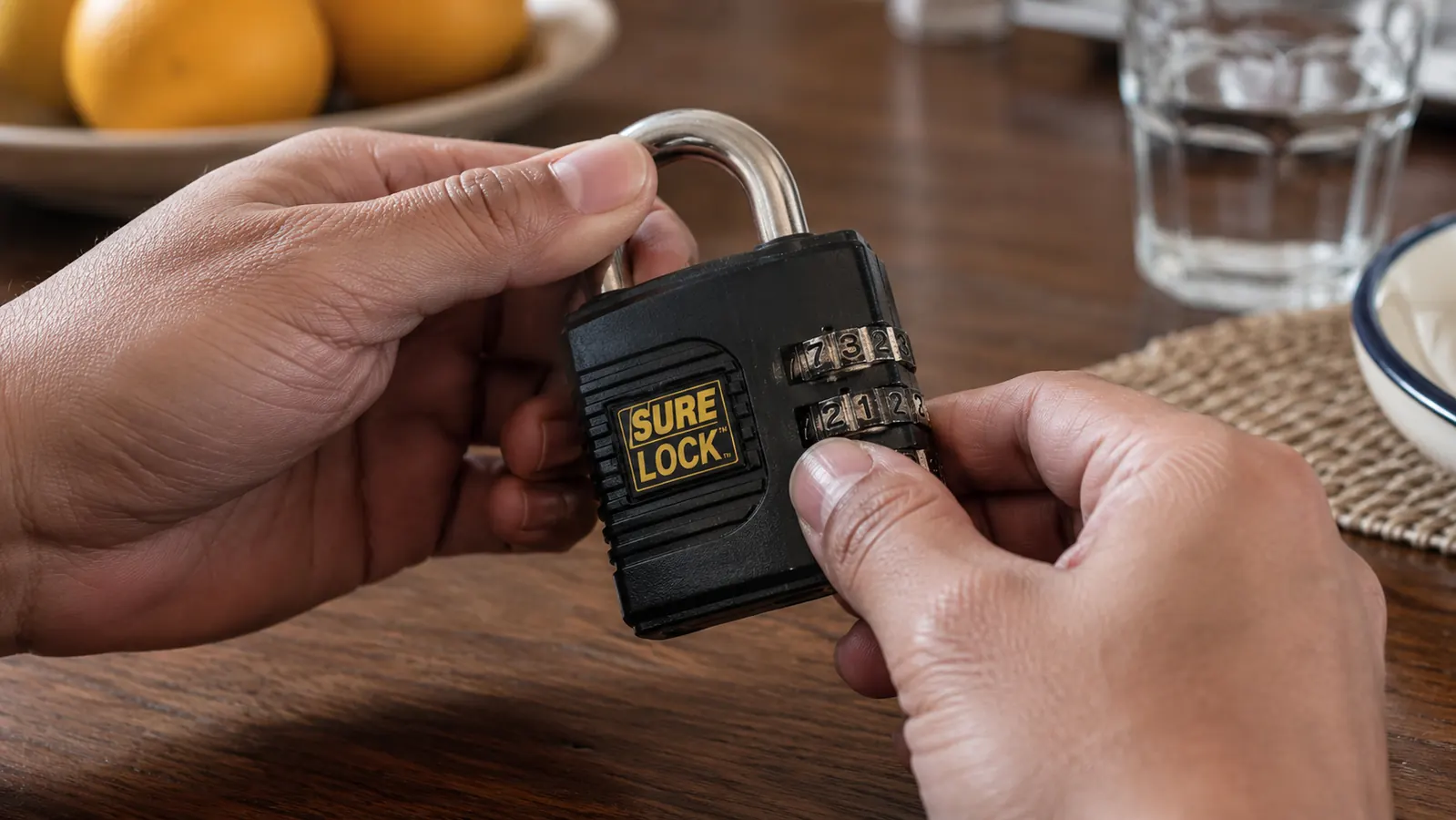
The included instructions for changing the combination are a single small card, and I will admit I did not read it carefully the first time. The process is simple once you know it, hold the shackle depressed, spin the dials to your new code, release. What the card does not warn you about is how easy it is to fumble that sequence and land on 000, which some of these three-digit locks default to and which anyone can guess in about two seconds. I did exactly that on a Sunday night packing for an early flight, spun the dials while distracted, and did not notice the combination had landed on the default until I was already at the gate checking my bag. Nothing happened, the bag traveled fine, but a lock set to 000 is not really locked in any meaningful sense, and the instructions never flag that risk directly.
There is also no manufacturer reset code or override if you genuinely forget your own combination, which some travelers assume exists because that is how a few higher-end locks work. If you forget it, you are working the dial through combinations by hand or cutting the shackle, the same outcome as a lock that was never TSA-recognized in the first place. I keep my combination saved in a password app now instead of trusting memory, and I would recommend anyone buying this lock do the same from day one rather than learning it the way I did.
What Happens When TSA Doesn't Relock the Bag
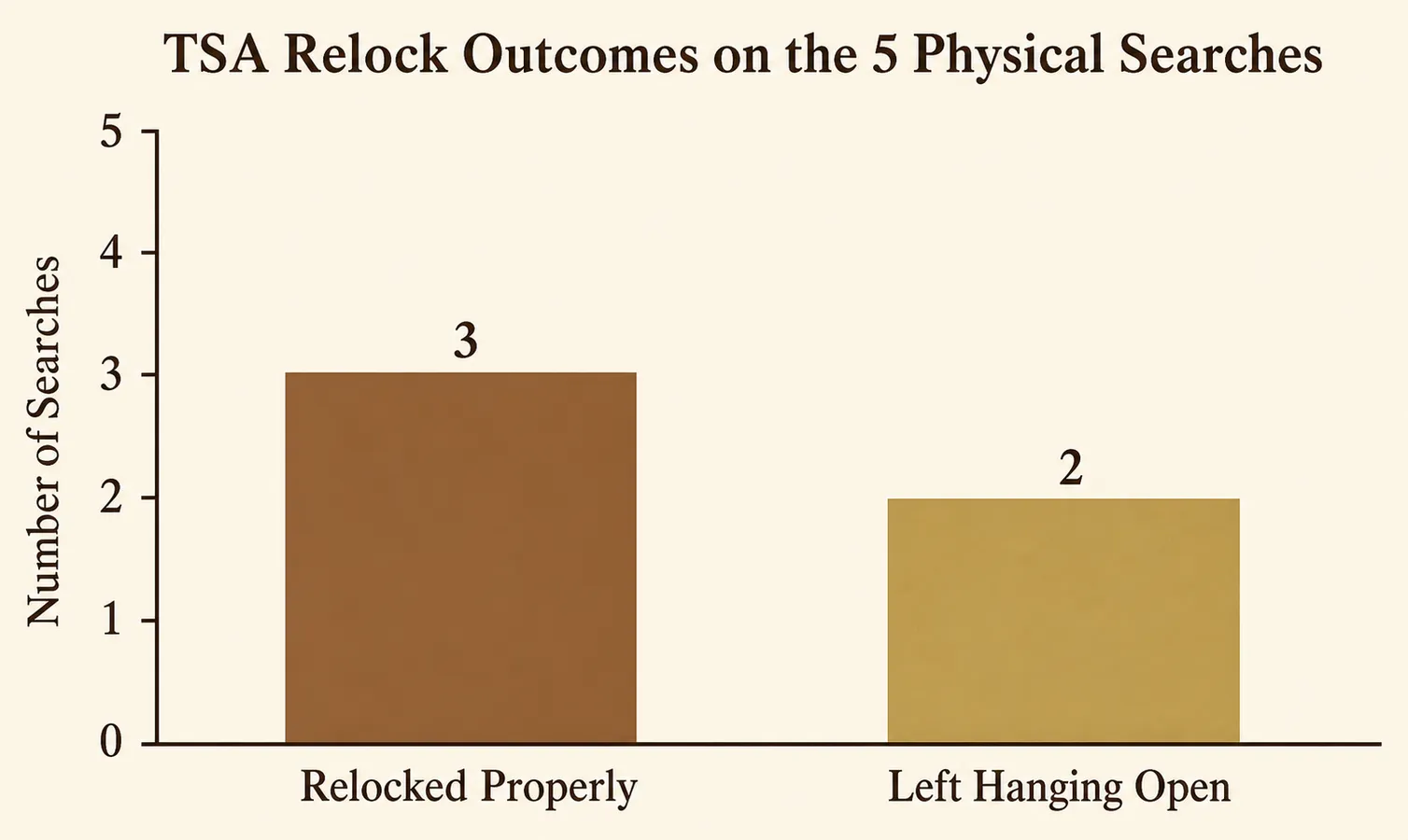
This is the part almost nobody mentions in reviews, because it does not happen every time, but it happens often enough to plan around. Out of 31 checked-bag trips, TSA opened my bag for a physical search on five occasions. In three of those, the lock was relocked exactly as expected, red indicator up, combination unchanged, bag secure at baggage claim. In the other two, the bag arrived at baggage claim with the lock hanging open, the zipper pulls loose, and the standard printed TSA inspection notice tucked inside. Nothing was missing either time, and I do not think this is a flaw specific to the SURE LOCK hardware, agents sometimes simply do not relock a bag after a manual search, and there is no requirement that they do.
The reason this matters is that a checked bag with an unlocked zipper for the rest of its trip through the cargo system is exactly the scenario the lock was bought to prevent, and the open alert indicator cannot warn you about it while you are still standing at your departure gate. You only find out at baggage claim, after the fact. My workaround has been simple, I glance at the lock the moment I lift the bag off the carousel, and if it is open I check the contents right there before I leave the airport. Twice in eighteen months is not a high rate, but it is not a zero rate either, and the product listing gives no hint that this is a normal, expected outcome of the screening process rather than some rare malfunction.
The Wear You Only Notice at 6 AM
Nobody writes a review about number legibility, but after eighteen months it is the thing I notice most. The three digits on the dial are stamped into the metal rather than printed, and stamped numbers wear smooth with enough handling. On my primary lock, the digits are still readable in good light, but at a 6 AM baggage claim under fluorescent terminal lighting, I have caught myself pulling out my phone flashlight more than once to confirm which number I was actually looking at. My spare lock, which has spent most of its life sitting untouched in a drawer, still has crisp, easy-to-read digits by comparison, which tells me the wear is coming from handling and not from age on the shelf.
This is a minor thing on its own, but it compounds with the reset process above. A dial that is slightly harder to read is a dial you are more likely to fumble while distracted at a packing table, which is exactly the situation that landed my combination on 000 in the first place. If you travel often enough that this lock will see a couple dozen trips, budget for the numbers getting harder to read well before the mechanism itself shows any sign of failing.
Where the Price Math Actually Lands
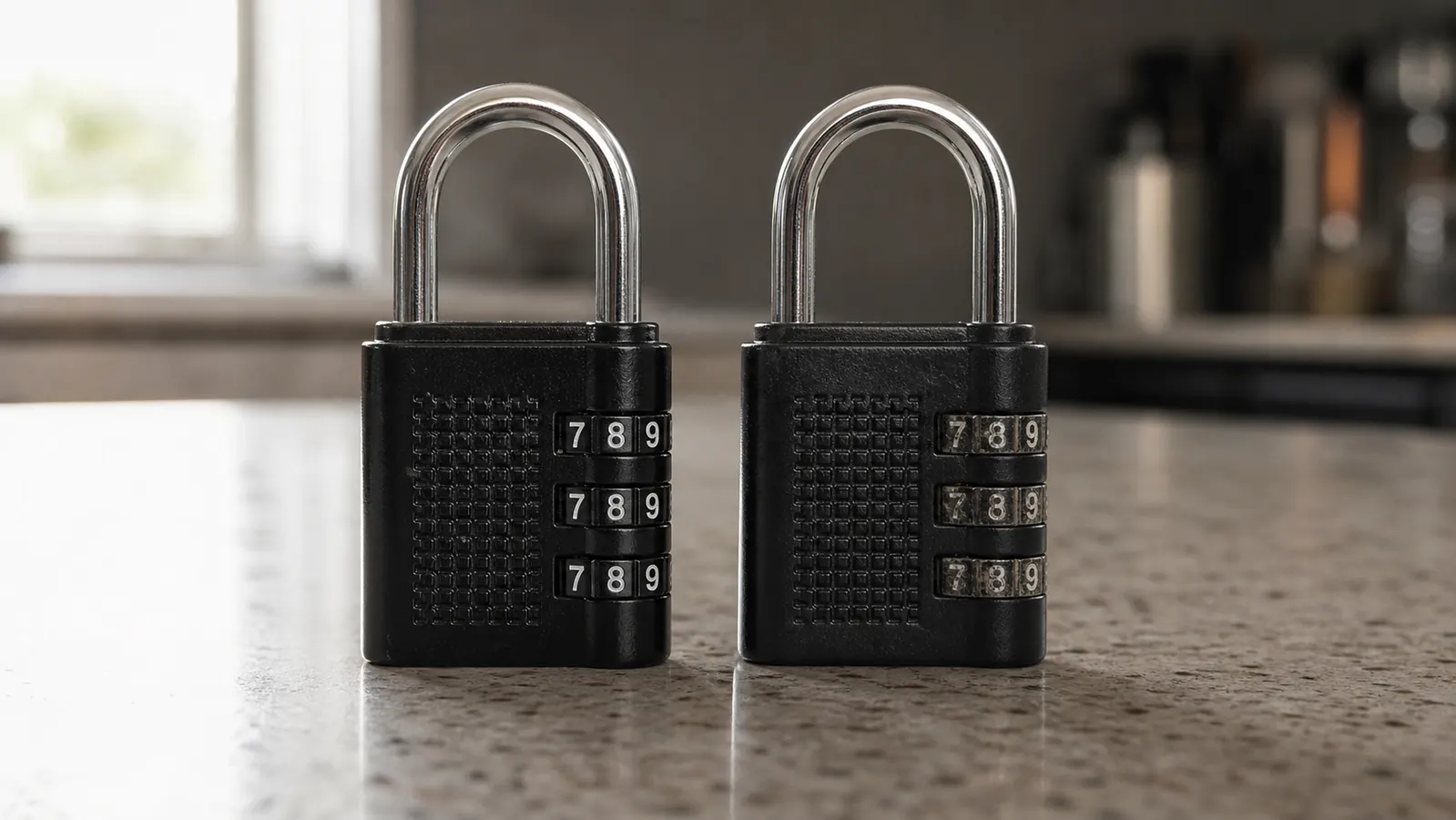
The set costs $11.95 for two locks, which works out to under six dollars each, and I want to be straightforward about how that has actually played out for me rather than just repeating the number. I have used one lock actively across all 31 trips. The second has been a spare, essentially unused, sitting in a drawer as backup in case the first one failed or got lost at a TSA checkpoint. It never did either. So in practical terms, I paid roughly twelve dollars for one lock that has done the job for a year and a half, and a second lock I am glad I have but have not needed. That is a fair trade for peace of mind, but it is worth knowing the two-pack is really insurance against loss more than it is two locks in active rotation, which is a slightly different value proposition than the listing photos of two locks on two bags suggest.
If you want the deeper dive on how the dials and shackle held up mechanically over a full year of flights, including the specific comparison against a similar lock from Forge, that ground is already covered thoroughly in our full year-long SURE LOCK review, and I did not want to repeat it here. This piece is meant to sit alongside that one, filling in what a single long-term test does not always surface, the small friction points that only show up when you are paying attention to the fine details rather than the headline mechanics.
What I Liked
- Genuinely functions as a TSA-recognized lock, agents opened it with the master key rather than cutting it in every one of 5 inspections
- Open alert indicator correctly showed red on all 3 occasions the bag was relocked after a search
- Under six dollars per lock at the current two-pack price, cheap enough that losing one is not a real cost
- Compact and light enough that it never factors into a checked bag weight limit
- Deterrence value against casual tampering and popped zippers is real and has held up over 31 trips
Where It Falls Short
- Reset instructions do not warn that a fumbled combination change can land on the guessable default of 000
- No manufacturer override if you genuinely forget your own combination, you are working the dial by hand
- TSA relocked the bag properly in only 3 of 5 physical searches, the other 2 arrived with the lock hanging open
- Stamped dial numbers wear smooth with regular handling and get harder to read in dim lighting well before the mechanism fails
- Marketing photos imply two locks in active use, in practice the second lock in a set is mostly insurance against losing the first
A TSA lock is a deterrent and a tamper indicator, not a vault. The gap between what the listing photo implies and what the lock actually promises is the whole story here.
Who This Is For
This lock is a sensible pick for anyone who checks bags often enough to want a real deterrent against a popped zipper, and who is comfortable with a lock's actual, honest job description rather than an inflated one. It suits travelers who will save their combination somewhere other than memory, who will glance at the lock at baggage claim rather than assuming it always relocks, and who understand that six dollars buys reasonable everyday hardware, not a vault. If you have read this whole review and none of it changed your mind about wanting one, that is a good sign you understand exactly what you are buying, which is more than most people can say before their first flight with one. If you want the fuller backstory of how I ended up trusting a six dollar lock in the first place, I told that story here.
Who Should Skip It
Skip it if you are buying a TSA lock because you believe it guarantees your bag arrives exactly as you packed it. It does not, and no lock this size honestly does. Skip it too if you are the type of traveler who will not remember to check the lock status the moment your bag comes off the carousel, since the two times mine arrived unlocked, the only thing that mattered was noticing quickly. And if legibility matters more to you than most people, if you have struggled to read small worn numbers in poor light before, factor that into your decision now rather than eighteen months into ownership. For most travelers none of that is a dealbreaker, but it is fair to know before you buy.
Know exactly what you are buying before your next flight, not after.
This is the same SURE LOCK TSA-approved lock covered in this review, reset instructions, relock gaps, and all. See today's price and current stock on Amazon.
Amazon Check Today's Price on Amazon →