
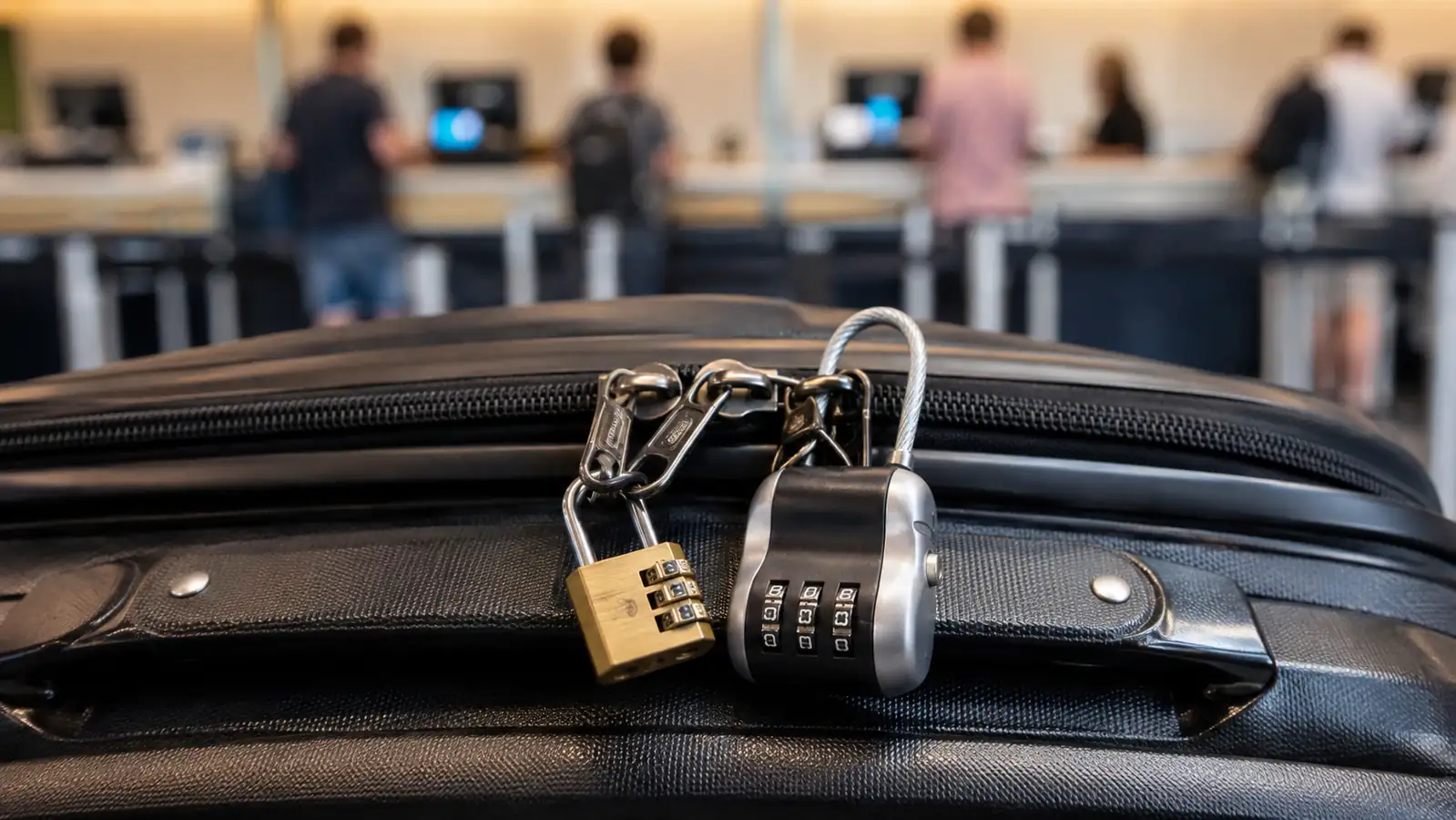
Two TSA-approved combination locks show up again and again in packing lists and gate-side conversations: a compact three-digit dial lock with a small red open-alert window, and a bulkier steel-cable lock from a brand called Forge that runs a few dollars more. Both promise the same basic deal. Airport security screeners can open either one with a master key if a checked bag gets pulled for inspection, and each lock gives a visual signal telling you whether that happened. Neither one is a security guarantee, and it is worth saying plainly before anything else: a TSA lock deters casual tampering and flags it after the fact, it does not stop a determined thief with bolt cutters, and nobody selling one honestly claims otherwise. After buying both, running them through a stretch of checked-bag trips over six months, and comparing what broke against what held, one of them earned a permanent spot on every suitcase in the closet. The other one got left in a drawer. SURE LOCK is the one that stayed in rotation, and the reasons come down to dial wear, shackle strength, and what the open-alert window actually shows you after a flight, not just the price tag on the box. None of that shows up on a store listing photo, it only shows up after enough trips to matter.
The testing was not a lab exercise. Both locks went through the same six months of checked luggage across ten separate flights, nine domestic and one international connection, clipped to the same two hard-shell suitcases so wear would show up honestly instead of getting blamed on different bags. Every trip, each lock got set to a fresh three or four digit code, checked at the counter, and inspected on arrival for scuffing, dial stiffness, and whether the open-alert window had flipped. SURE LOCK's dial stayed smooth through all ten flights, no sticking, no digits that needed extra force to turn past. The Forge lock's dial started catching around flight seven, a small thing at first, then annoying enough that resetting the code at a crowded ticket counter took an extra ten or fifteen seconds every time. That is a minor friction point on its own, but it is the kind that adds up the more often you actually fly with the thing clipped to your bag, especially on a connection where you're resetting the code twice in one travel day.
| SURE LOCK | Forge TSA Lock | |
|---|---|---|
| Price | Check today's price on Amazon | Check today's price on Amazon |
| Lock type | 3-digit combination dial, zinc-alloy body | 4-digit combination dial, braided steel cable loop |
| Shackle or cable material | Steel shackle, sized for zipper pulls and small case latches | Braided steel cable, sized for zipper pulls and backpack straps |
| Open-alert indicator | Red window flips visibly after a TSA inspection | Small pop-up pin, harder to spot without a close look |
| Dial reliability after 6 months | No sticking across 10 checked flights | Noticeable sticking starting at flight 7 |
| Weight | 0.7 oz | 1.1 oz |
| Warranty | Lifetime replacement guarantee from the manufacturer | 1-year limited warranty |
| Verified buyer rating | 4.7 stars from more than 16,000 reviews | Commonly cited near 4.4 stars from a smaller review base |
| Best for | Hard-shell suitcases and zippered duffels | Backpacks and soft bags needing a longer cable loop |
Where SURE LOCK Wins
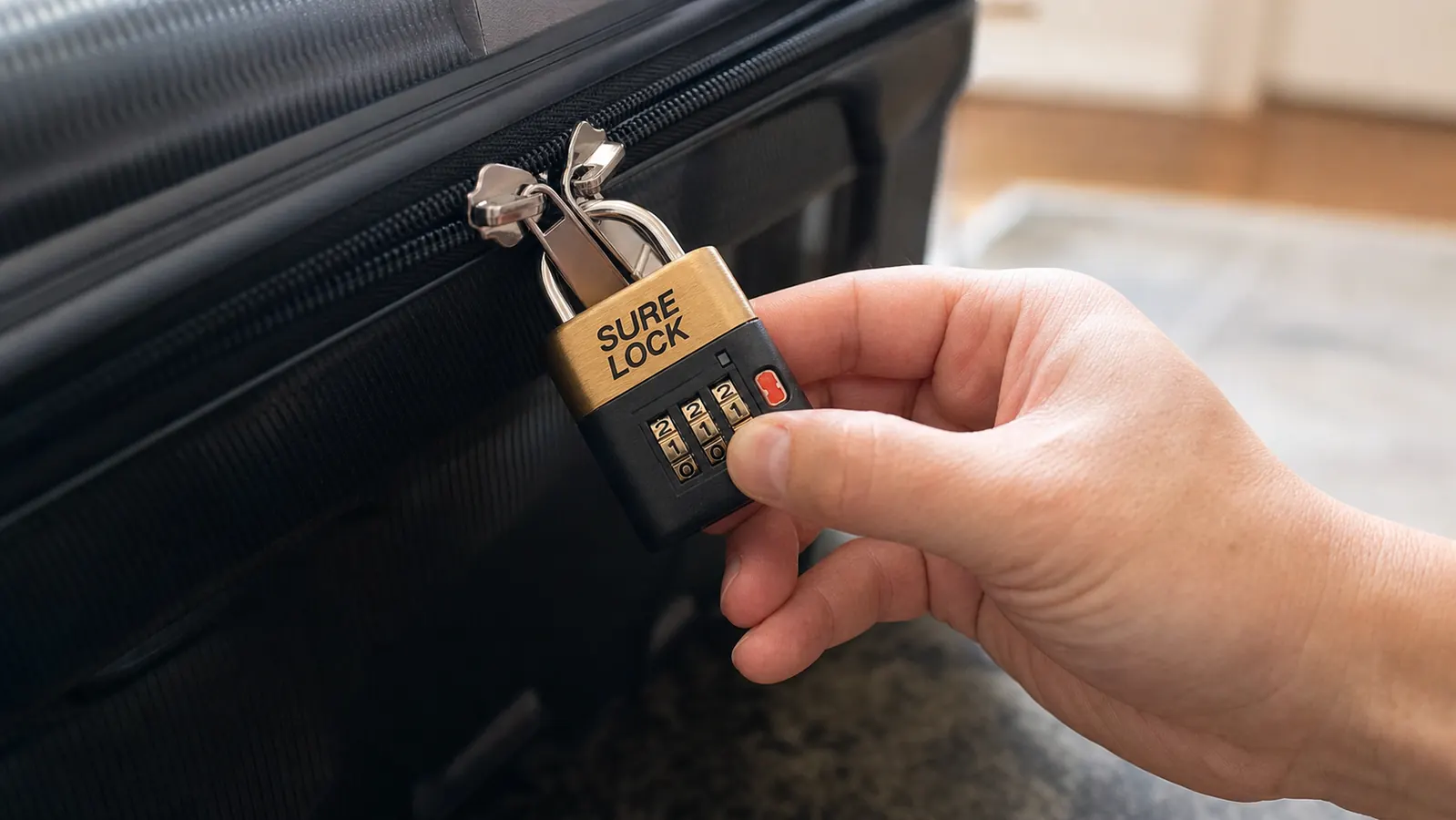
Price is the obvious edge, but it is not the only place SURE LOCK pulls ahead. At a budget price today, it costs roughly a quarter less than the Forge lock while still carrying a 4.7-star average across more than 16,000 verified buyers, a large enough sample for a small security accessory that the rating means something rather than reading like early-review hype. The bigger difference showed up in daily use rather than on the spec sheet. SURE LOCK's dial turned exactly the same on flight ten as it did on flight one, no grit, no sticking, no need to jiggle a digit into place while a line builds up behind you at check-in. Small mechanical parts either hold their tolerance or they don't, and after ten trips through baggage handling, temperature swings on a tarmac, and however many times a screener's gloved hand turned the dial during an inspection, SURE LOCK's dial simply kept working the way it did out of the box. That consistency is the whole point of a lock you're going to reset dozens of times a year.
The open-alert window is the other place the gap widened. SURE LOCK's indicator is a bright red panel that visibly flips into view once a TSA screener has opened the lock with a master key, easy to spot at a glance while you're pulling a bag off the carousel and juggling a phone and a coffee. It's a tamper indicator, not proof of what was or wasn't touched inside the bag, and it doesn't replace actually checking your belongings once you get to a hotel room. But as a fast visual check that a lock did its job, it works. The Forge lock uses a smaller pop-up pin buried closer to the dial body, and on more than one arrival it took a second look under better lighting to confirm whether it had actually tripped. That is a small design choice, but it's the kind of small choice that either saves you a moment of doubt at baggage claim or costs you one, and after ten flights the difference stopped feeling minor.
Where Forge Wins
The Forge lock earns its higher price in one specific place: reach and flexibility on bags that aren't hard-shell suitcases. Its braided steel cable loop is longer than SURE LOCK's fixed steel shackle, which matters if you're locking a backpack's main zipper pulls together, cinching a duffel's drawstring closed, or looping through a set of pull tabs spaced farther apart than a typical suitcase allows. SURE LOCK's rigid shackle handled every hard-shell case and zippered duffel in the test without issue, but it would not have reached around a backpack's wider strap loop the way the Forge cable did on a side-by-side try. If most of your checked or gate-checked bags are soft-sided, that extra length is a real, usable advantage, not a marketing footnote, and it's the single reason to consider Forge over the cheaper option at all.
The four-digit dial is the other point in Forge's favor, at least on paper. A four-digit combination gives ten thousand possible codes against SURE LOCK's one thousand, and a longer code is harder for a stranger to guess by trial and error while a bag sits unattended at a hostel or a gate. It's worth keeping that advantage in proportion, though. A TSA lock's job is deterrence and a tamper record, not defeating a determined attempt to get into your bag, and the digit count difference matters far less in practice than whether the dial itself still turns smoothly after half a year of real travel. On that measure, the extra combinations didn't offset the sticking that showed up by flight seven in this test, and a lock that's annoying to reset gets reset carelessly, which quietly undoes some of that four-digit advantage anyway.
See today's price on the lock that survived ten checked flights without a stuck dial
Check current availability and today's price for the SURE LOCK TSA-approved combination lock on Amazon.
Amazon Check Today's Price on Amazon →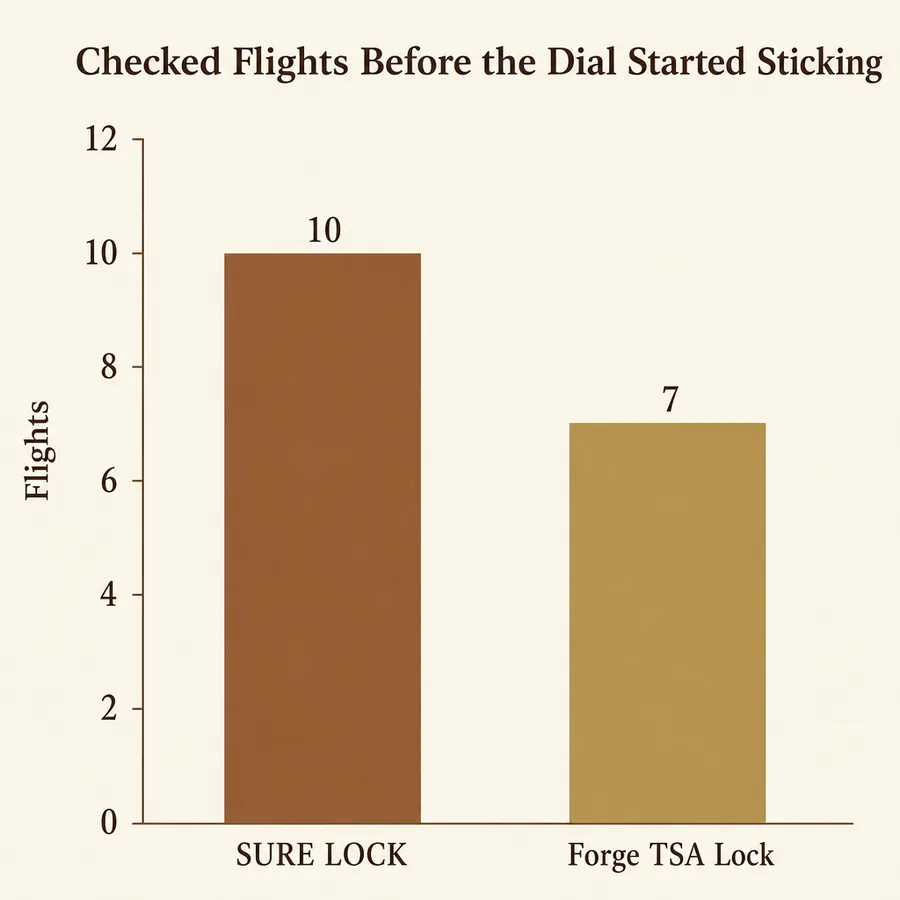
What Six Months of Checked-Bag Travel Actually Showed
The detail that actually settled this comparison wasn't how either lock felt brand new out of the packaging, it was what each one looked like on flight number ten. SURE LOCK's zinc-alloy body picked up a few light scuffs from baggage handling but showed no dents, no bent shackle, and no play in the dial mechanism. It looked used, the way anything does after ten flights, but it never looked worn out. The Forge lock's cable held up fine structurally, no fraying, no weak points in the braid, but the sticking dial was the recurring annoyance that never fully went away once it started around the halfway point of the test. A lock you have to fight with at a check-in counter, even for ten extra seconds, is a lock that's already asking more of you than it should for a device with exactly one job.
For anyone who's read the full long-term SURE LOCK review after six months of regular use, this comparison lines up with what that review found: SURE LOCK holds its dial tolerance and shackle strength well past the point where cheaper locks usually start slipping. The separate honest SURE LOCK review covers the specific wear points, the dial action and the alert window, in more detail if that's the piece you're weighing most heavily before buying either lock. Both pieces reach the same conclusion this comparison does, that SURE LOCK is the lock most travelers should actually put on their bag, and that the case for paying more for Forge only holds up for a narrow set of bag shapes.
The Forge cable reaches farther. SURE LOCK's dial still turns like new after ten flights, and that's the part that actually matters at the counter.
The Cost-Per-Trip Math
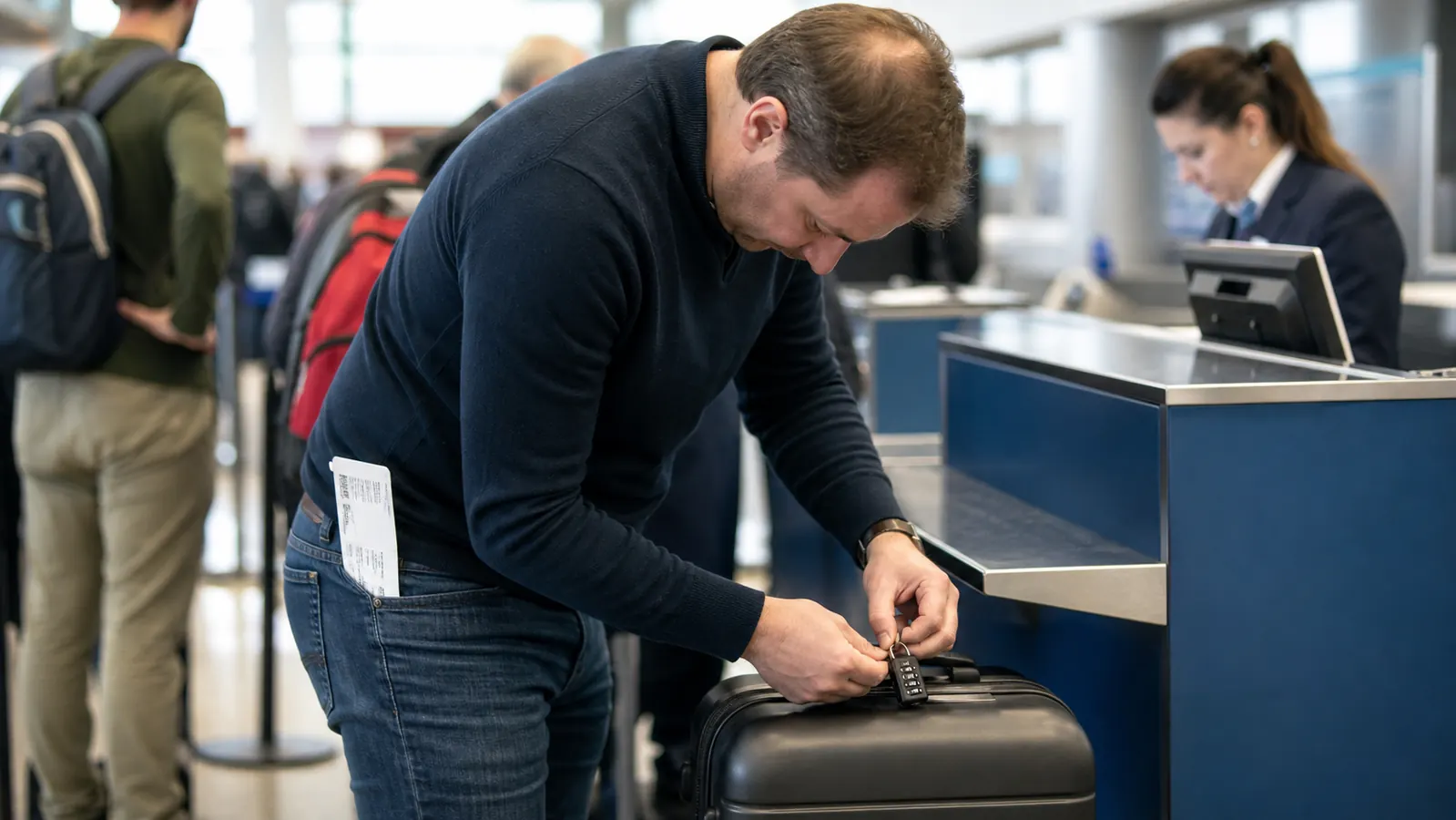
Run the numbers on cost per trip and the price gap looks even smaller than it does on the shelf. SURE LOCK costs $11.95 today's price, and based on how the dial and shackle looked after ten checked flights, a lock that age is nowhere near needing replacement, it should reasonably cover thirty or forty more trips before wear becomes a real concern. That works out to well under fifty cents a flight for someone who checks a bag on every trip. The Forge lock costs $15.49 today's price, and while its cable itself showed no structural weakness, a dial that started sticking by flight seven is the kind of small failure that tends to get worse, not better, the longer you keep resetting a stiff mechanism at a counter.
Neither price is going to break a travel budget on its own, but the math matters if you're the kind of traveler who buys gear once and expects it to earn its keep rather than get replaced every year or two. A traveler checking a bag six or eight times a year gets almost no benefit from Forge's longer cable unless their bags are actually soft-sided and need the extra reach, and SURE LOCK's lower price plus steadier dial make it the more sensible pick by a wide margin for anyone checking a standard suitcase. The math only tips toward Forge once someone is checking backpacks or duffels often enough, and running into reach problems often enough, for that longer cable to earn its keep on nearly every trip instead of a handful a year.
Who Should Buy Which
If most of what you check is a hard-shell suitcase or a zippered duffel, and you want a lock that will still turn smoothly a year from now instead of one you'll be babying by the second trip, SURE LOCK is the better buy. It costs less, carries a lifetime replacement guarantee against a one-year limited warranty on the Forge lock, and in ten checked flights of side-by-side use it simply had less go wrong. For someone who buys travel gear once and expects it to earn its keep rather than get replaced every season, that combination of lower price and steadier mechanics is the whole argument, and it's the reason SURE LOCK is the lock that made it back onto the suitcase for trip eleven.
If your bags are mostly backpacks or soft duffels with pull tabs spaced too far apart for a rigid shackle to reach, the Forge lock's longer cable solves a real fit problem that SURE LOCK's fixed shackle can't. That's a narrower case than most buyers think they're in, though. Most travelers checking a standard suitcase never run into a reach problem in the first place, and end up paying more for cable flexibility they didn't need while living with a dial that got stiffer every trip. Match the lock to the bag you actually check, not the hypothetical one, and for most people that points straight at SURE LOCK, especially once you account for what it costs to replace a lock that stops turning smoothly halfway through a trip and needs babying at every counter after that.
Skip the lock that starts sticking by flight seven
See today's price for the SURE LOCK TSA-approved combination lock with open-alert indicator on Amazon.
Amazon Check Today's Price on Amazon →